Pilot Program Equipment Coverage Before Commercial Launch
Generic floaters can leave pilot robots uninsured, so here is what to fix.
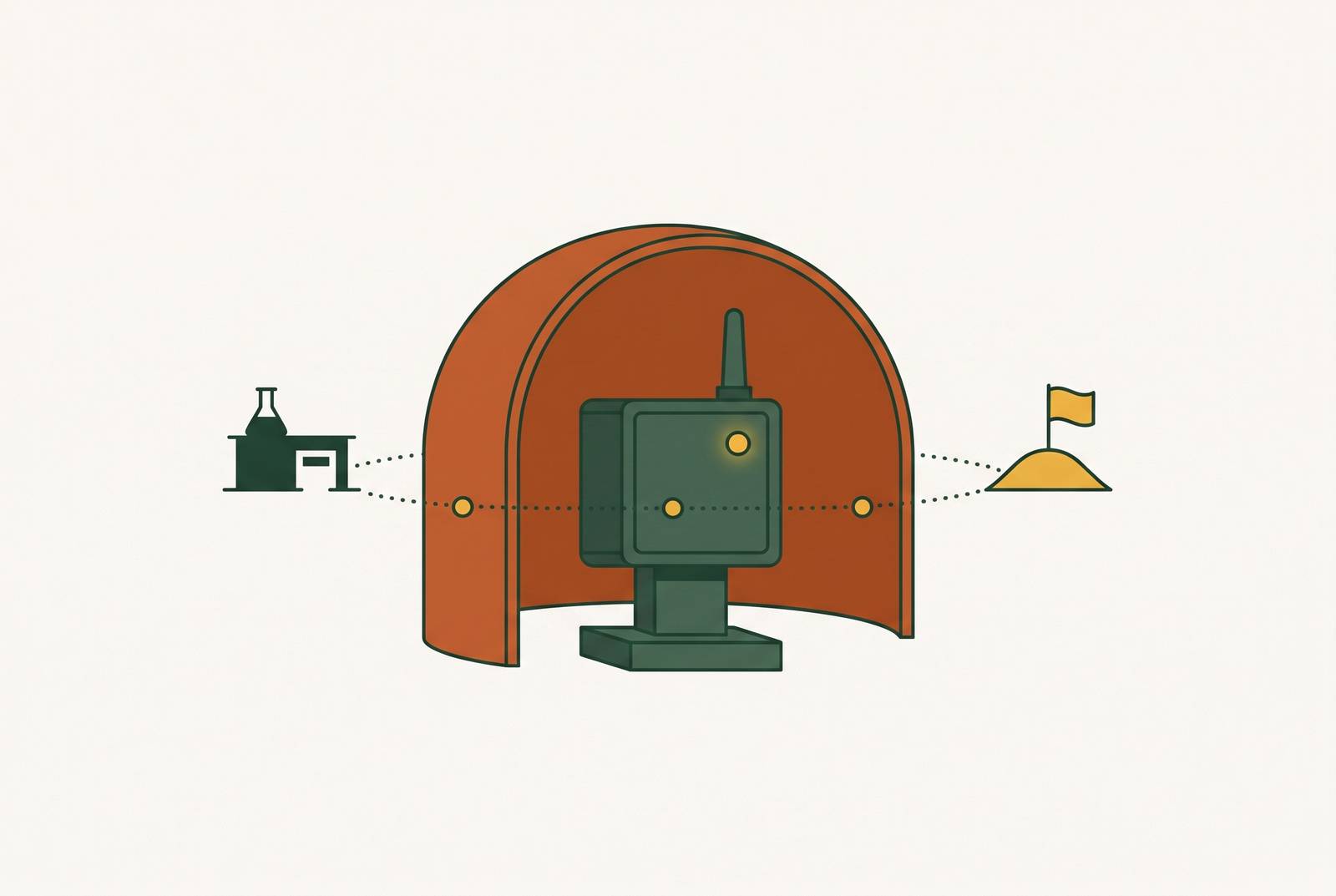
Inland marine coverage for deployed robot fleets must cover physical damage to units traveling between job sites and operating at customer locations, with wording that expressly accommodates the hardware, pilot stage, and AI systems involved. Before commercial launch, a generic equipment floater can leave the company’s most valuable hardware uninsured. Closing that gap requires pilot-specific property and liability coverage, supported by a submission that describes how the machines actually operate.
Why pilot program hardware lands in a coverage no-man's-land
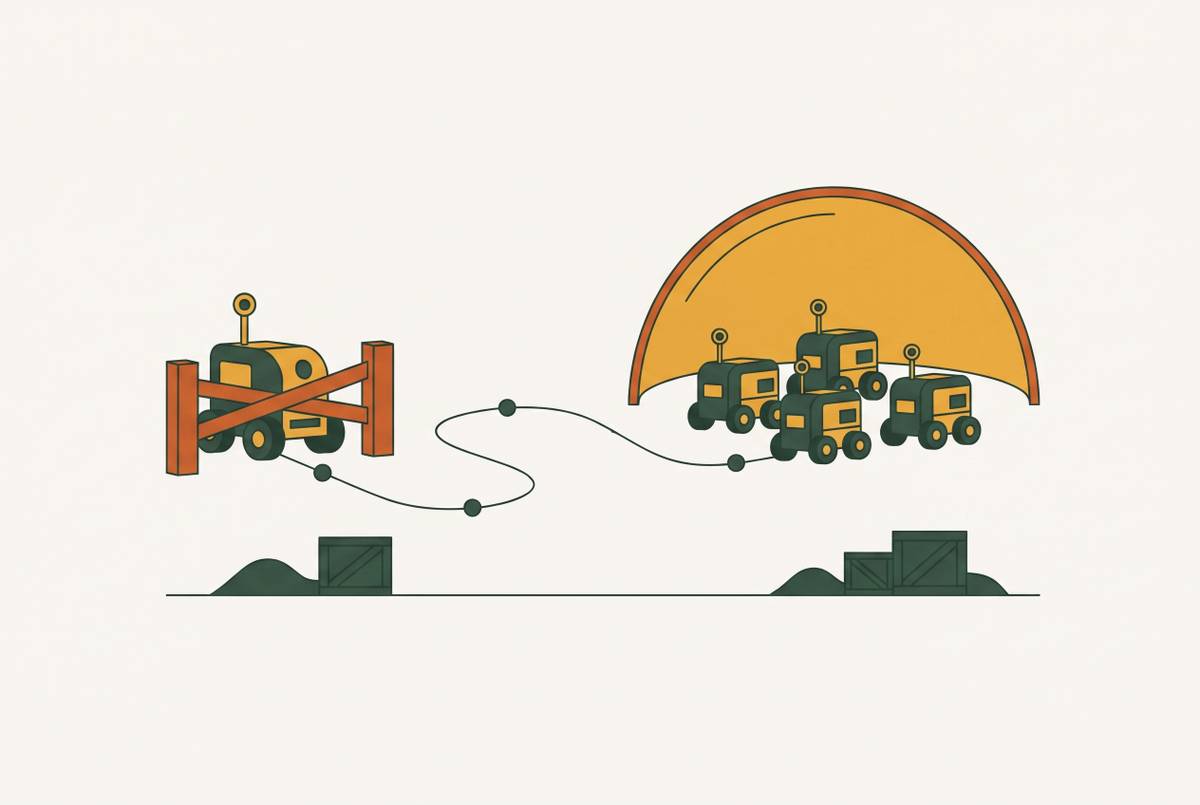
Standard policy frameworks distinguish between commercial equipment and research hardware, but a pilot unit occupies both categories without fitting either. It can be a prototype, a product under test, and a revenue-generating demonstration at the same time. Yet standard forms classify hardware by commercial status and use, so those overlapping roles create uncertainty about whether the unit qualifies for coverage at all.
Physical AI adds a second mismatch. Traditional machines follow fixed commands, while physical AI systems use sensors, software, and AI models to decide how to act as conditions change. That adaptive behavior complicates the liability framework built around more predictable equipment. When a pilot fails, the hardware maker, AI model supplier, and operator can share exposure.
The timing makes that ambiguity particularly dangerous. Generic forms can exclude products that are not yet commercial, even when the equipment is already working at a prospective customer’s plant. The demo unit may be the company’s most valuable asset and the very asset its coverage omits. A pre-commercial carve-out can therefore leave the pilot outside coverage before anyone needs to decide who was at fault.
What standard property and inland marine policies actually say about hardware in the field
Standard property coverage follows the building and its contents. A pilot robot working at a customer’s site is off-premises hardware, so it may need a separate inland marine endorsement or equipment floater to be covered for physical damage. Owning the robot does not, by itself, establish that a policy covering equipment at the company’s premises follows it into the field.
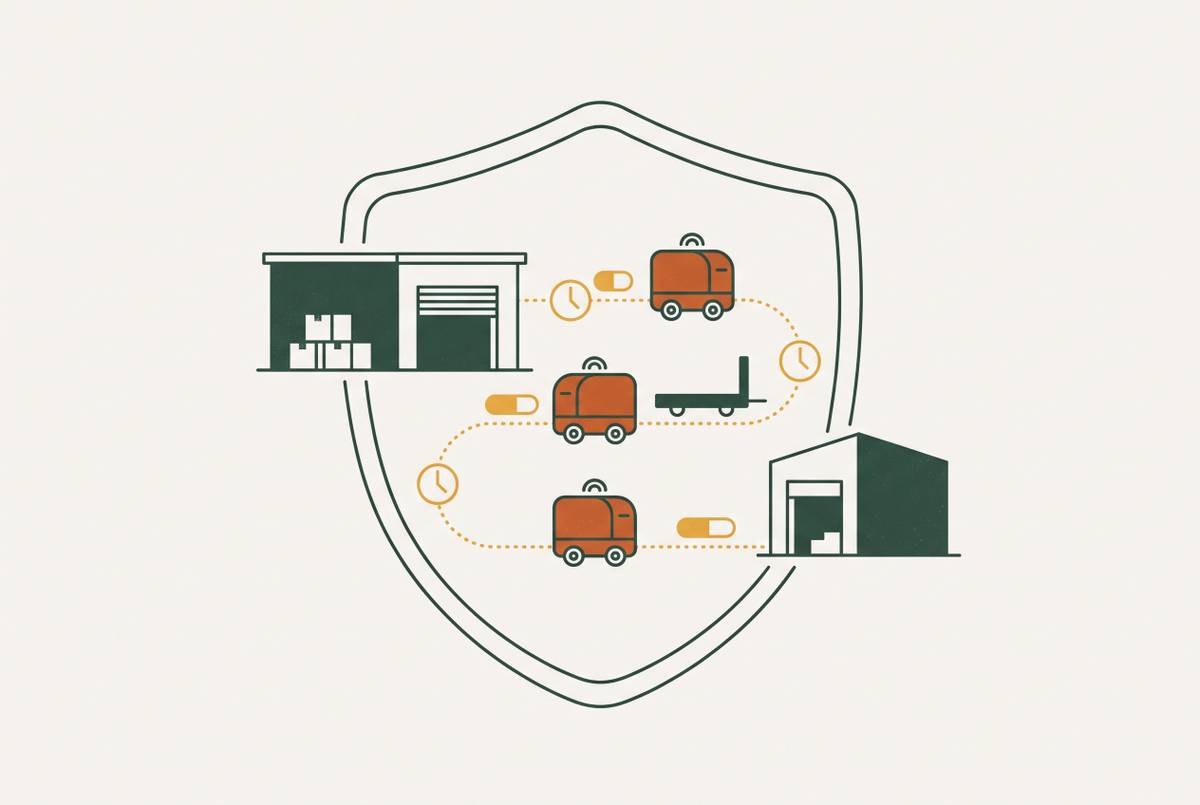
Inland marine is designed for equipment in transit and at third-party sites, making it the relevant physical damage line for mobile robot fleets. Its name alone does not establish its scope. WTW says clients moving from supervised systems to truly autonomous ones should start with the policy wording, especially its coverage triggers and exclusions. An existing programme may not automatically accommodate that change in operation.
The exclusions can cut across both equipment and customers. Pre-commercial and R&D exclusions can remove the prototype, while government-use and export-control exclusions can remove a defense pilot from coverage. A firmware defect that causes physical harm can also fall between general liability wording written for harm from an external cause and tech E&O wording written for a technology service. Neither policy label resolves that boundary.
Even a responsive inland marine policy has a narrower function than many founders expect. It typically covers physical damage. If a robot fails and shuts down a customer’s line, insurance for fixing the robot and insurance for paying for the shutdown are separate questions. Coverage for the machine does not establish coverage for the financial consequences of its failure.
How AI exclusion filings are quietly removing the coverage pilots depend on
The structural gap is also being widened by explicit exclusions. The Insurance Services Office (ISO) brought out generative AI exclusion endorsement templates in 2025, and its Generative AI Exclusion for commercial general liability took effect January 1, 2026. These changes make AI exclusion wording a concern for hardware companies whose products rely on AI systems. A familiar liability form can now contain an endorsement that changes the answer for a particular pilot.
The scope of the exclusion remains decisive. A generative AI exclusion is not automatically an exclusion of every autonomous function, and its title cannot establish whether a particular robot’s operations fall within it. Whether the AI use case involved in the loss is excluded depends on the bound wording. For a pilot combining hardware, software, and AI components, that question cannot be answered from the policy’s general description.
Specialty products are starting to offer affirmative coverage as standard-market forms put more limits on what they cover. The available protection remains boutique, however, with limits that may not match the exposure created by a pilot at a large enterprise or government customer. Availability is therefore only part of the answer. A product can expressly cover an AI-related event yet still provide too little capacity for the contractual and operational exposure of the deployment.
Why the pre-commercial stage concentrates risk instead of spreading it
Before launch, a company’s entire demo fleet may account for most of its capitalized hardware value, with every unit working outside the company’s own site. The company controls less of that environment.
Underwriters also have less evidence at this stage. Insurers use past claims, equipment records, and operating controls to price commercial risk, but a pilot has little history and much that can change. The same robot poses different risks at two sites because each has a different floor layout, worker interaction, software version, and operating limits. Those limits may also change after the policy is written, making a static description of the equipment an incomplete description of its exposure.
Physical AI has risk models that are still new and little coverage. The safety data needed to price its risks does not yet exist at scale, just as the business is placing valuable equipment into live operating environments. AXA XL’s CEO Americas has drawn a parallel with cyber insurance, where adoption outpaced understanding of how risk translated into insured loss. Physical AI does not have the same runway for market development before commercial deployment. Enterprise and government contracts bring that pressure forward into the pilot itself.
What enterprise and government pilot contracts actually require on insurance
The coverage problem often becomes concrete when a Fortune 500 or government customer sends its vendor agreement. The insurance clause can demand a programme that the pre-launch company has not assembled, even though the pilot is close to shipping. Discovery comes late in the sales process. Procurement timelines can make a policy overhaul almost impossible without delaying the deal, while the customer’s requirements remain effectively non-negotiable.
Fortune 500 vendor agreements usually call for commercial general liability, excess or umbrella coverage, cyber liability, and tech E&O. They often require workers’ compensation and other lines depending on the work. An equipment floater may cover the robot but still fall short of the coverage the customer requires for liability or technology-related financial loss.
The contractual endorsements require equal precision. Primary/Non-Contributory means the startup’s policy pays first without contribution from the client’s insurer, while Waiver of Subrogation means the startup’s insurer gives up its right to recover from the client after paying a claim. They govern different stages of a claim. Waiver requirements can extend across coverage lines, so treating the two provisions as synonyms leaves a substantive contract requirement unresolved.
These requirements need to be addressed before the agreement becomes the discovery mechanism. A contract does not expand an existing policy merely because the startup accepts its terms. A contract that calls for several liability lines also does not ensure that the pilot equipment itself is insured. The contractual programme and the equipment coverage have to function together before deployment.
What coverage does a pilot robot fleet need, and what must each line do?
General liability must include products and completed operations protection for claims that arise after the hardware leaves the company’s hands. A pilot at a customer site already creates that exposure, even before commercial launch. The relevant protection must not be removed by an AI exclusion or a pre-commercial limitation.
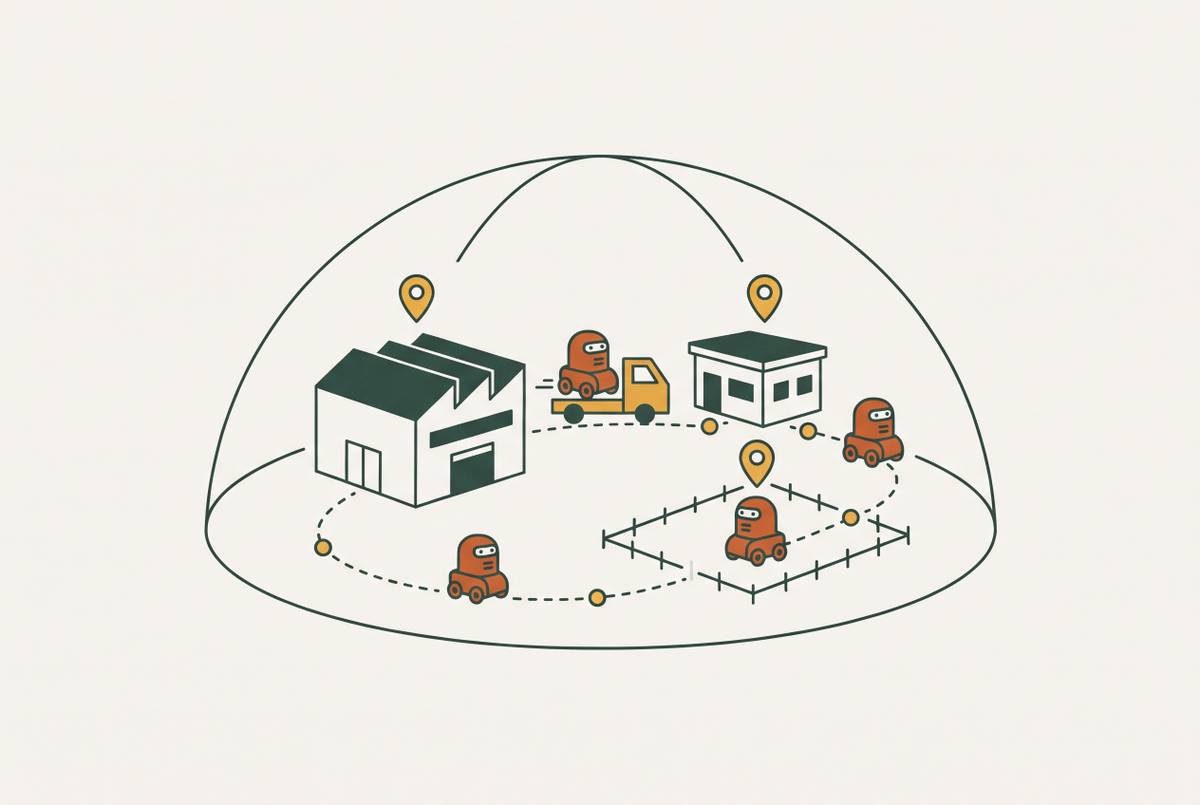
Inland marine or an equipment floater must address physical damage in transit and at third-party sites. For autonomous robots traveling between job sites or operating across multiple locations, the placement must name the specific units, pilot stage, and customer locations, and expressly accommodate autonomous or AI-driven hardware. The 2026 inland marine market is also moving toward tighter exclusions for theft, misdirection, and impostor-carrier losses, while underwriters may revisit limits and replacement cost values more frequently.
Tech E&O serves a different purpose from equipment protection. It must cover customer financial harm when the product’s firmware or software fails to perform, including relevant production downtime or data loss exposures that general liability will not cover. The technology must be described as part of the deployed product. Otherwise, a form aimed at technology services can leave the hardware-related failure between coverage lines.
Customer production loss or business interruption also needs express attention. A software update or sensor fault can take a robot offline and create downstream financial harm that most standard forms leave uninsured. Specialty programmes have begun covering this explicitly, but the wording must affirmatively confirm that protection. An E&O policy name is not enough to establish that every form of customer downtime is covered.
Workers’ compensation completes a separate part of the pilot programme. Once anyone is on payroll or on-site at a customer location, the coverage is non-negotiable and must reflect the actual work environment, including work beyond the company’s office address. The location is part of the exposure.
Why the underwriting submission determines whether a pilot program is actually covered
The right coverage lines can still be placed on the wrong description of the business. A submission that presents pilot hardware in generic commercial terms, without disclosing AI perception systems, pre-commercial status, or customer-site operations, gives the underwriter no basis to scope those risks accurately. The omission reaches beyond pricing. It can prevent the right endorsements from being attached or leave the carrier’s position on the relevant AI use cases unresolved.
For AI and autonomy risks, the submission needs four things in writing. These are a model inventory mapped to risk tier, a vendor diligence file for each AI component supplier, monitoring telemetry showing how the system is supervised, and an incident response runbook with named escalation paths. None appears on a standard commercial application. Together, they tell the underwriter how the system works in more detail than a broad label such as equipment manufacturer.
Silence on AI is not affirmative coverage. If a broker reports that no AI exclusions are attached and no AI questions appear on the application, but cannot produce written carrier confirmation of the covered AI use cases, the central uncertainty remains. Specialist placement sends the submission to carriers that expressly underwrite autonomous and AI-driven hardware. That lets the underwriter price the disclosed risk rather than respond conservatively to an incomplete account or exclude it.
This needs to happen before the shipment leaves. A founder should get written confirmation that the policy names the specific hardware, pilot stage, customer location, and AI systems involved. The bound wording must also leave coverage for the scenario the company is most likely to face intact under any AI exclusion.