Equipment Breakdown Coverage for Autonomous Systems With Complex Powertrains
Standard breakdown policies miss software-triggered robot failures.
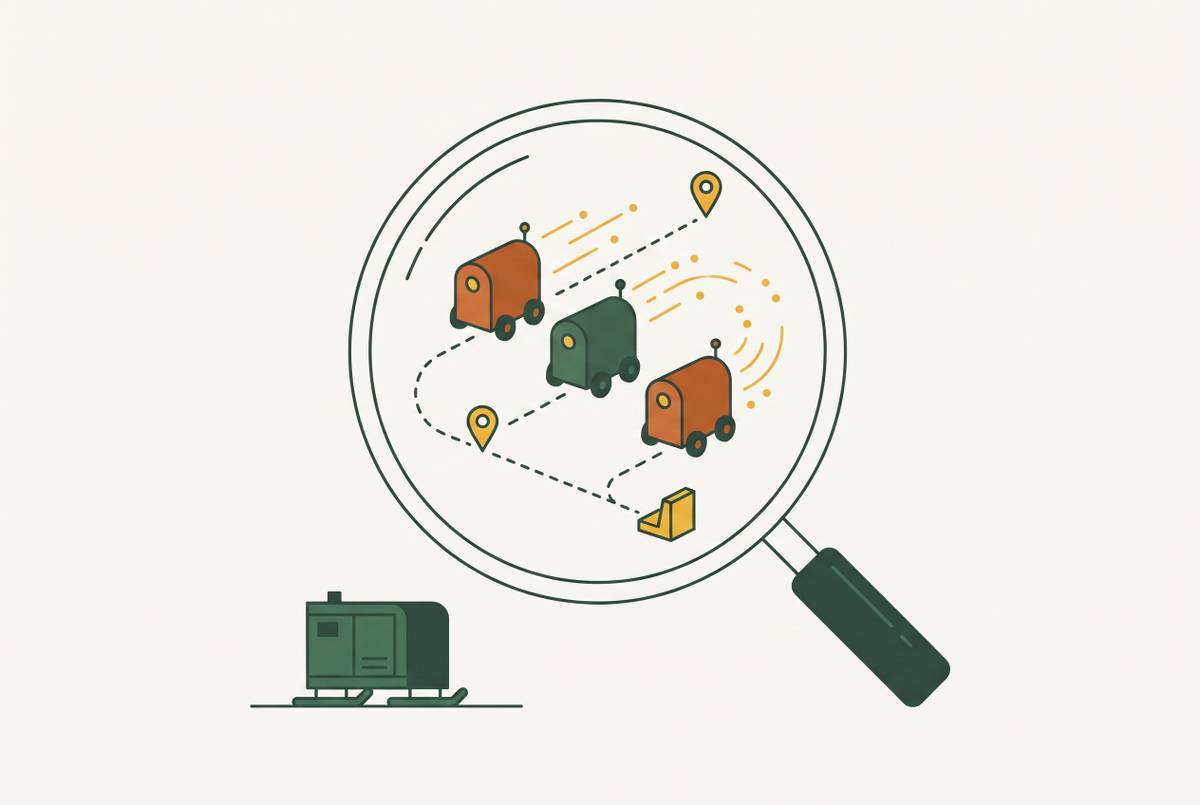
Inland marine coverage for deployed robot fleets covers physical assets against damage, theft, or loss in transit, so it fits autonomous robots that travel between job sites and work at more than one location. It does not, by itself, cover downstream production losses or liability. Equipment breakdown coverage for autonomous systems with complex powertrains must address a separate problem, because software, sensors, and AI can initiate failures that standard mechanical breakdown language does not reach.
Why equipment breakdown coverage was built for deterministic machines
Traditional equipment breakdown underwriting rests on a traceable relationship between a failed component and physical damage. The machinery in those models includes industrial controllers, relays, and hydraulic systems that run on fixed, pre-programmed commands. Their behavior is deterministic, with the same input producing the same output rather than a learned interpretation of changing conditions. The failure has an identifiable mechanical or electrical cause. That makes the damaged part a useful starting point for both pricing the risk and adjusting the claim.
Decades of actuarial loss data from thousands of incidents support this approach. Underwriters can compare equipment with known causation patterns, while adjusters can trace the chain from mechanical or electrical failure to direct physical damage. Standard breakdown language usually requires that physical damage. The mismatch begins when this framework is applied to equipment whose behavior also depends on software perception, AI decisions, and remotely delivered changes. A powertrain can act incorrectly even when it has not had the kind of component failure the policy expects.
What actually fails in an autonomous powertrain and why standard language doesn't reach it
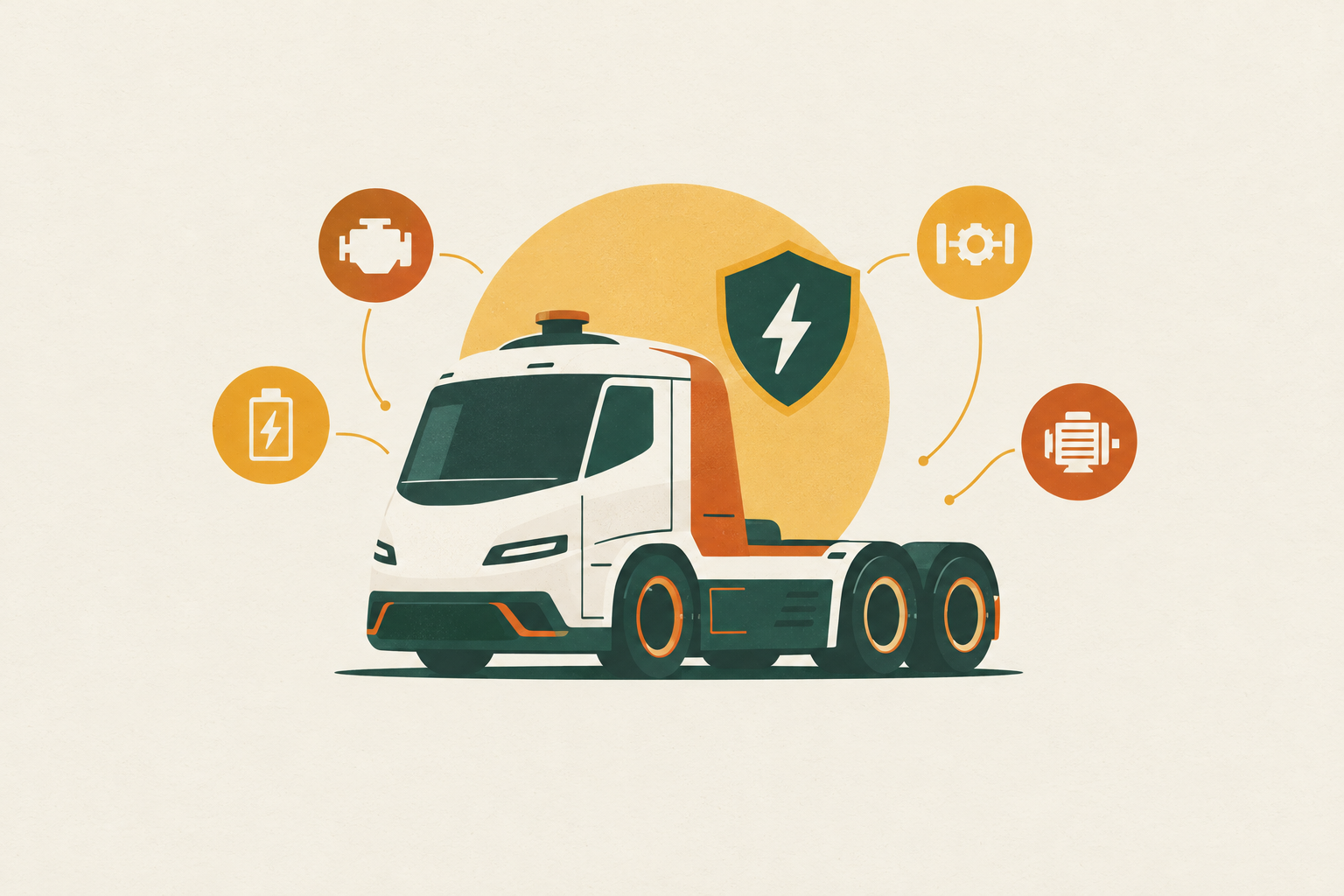
An autonomous powertrain has electric motors, battery packs, software-driven controls, and sensor arrays. Sensor degradation can cause an AI model to misread its environment and command the wrong motor response, placing the initiating error in perception. Neural network misclassification or “hallucination” in Vision-Language-Action models creates a related problem, because the system acts on a false reading of its surroundings. The loss can happen without the sudden physical failure of a covered part.
An over-the-air update can change powertrain behavior after the policy is written, shifting the risk without the carrier’s knowledge. A cyberattack can instead enter through digital controls and cause physical damage by taking over the robot’s motors. A defective third-party sensor or battery management chip adds another complication, because the component maker’s defective part may result in a claim against the integrator.
Caterpillar illustrates how the equipment itself is becoming unbundled. It sells autonomous-ready machines and separate retrofit systems combining hardware, software, and recurring licensing, turning a one-time equipment sale into an ongoing services model. The insured exposure therefore extends beyond the original machine to software failures, remote-control breakdowns, and cybersecurity breaches. Remote operation adds communication latency, system disconnection, and remote human error. Standard equipment underwriting has not stress-tested those failure points in the past, even though they can change how the powertrain works.
What insurance covers autonomous robots traveling between job sites — and where does each line stop?
Inland marine and equipment coverage cover the physical asset. For a mobile robot fleet, that includes the robots and powertrain components exposed to damage, theft, or loss in transit. The relevant distinction is between inland marine protection for deployed equipment and protection against the costs its failure imposes on others. It does not itself address downstream production losses or liability, and depreciation schedules on standard forms can understate the replacement costs of sensor arrays and battery systems.
Commercial General Liability, or CGL, addresses a different slice of the exposure, including products liability. Its underwriting models have covered manufacturing equipment for decades but were built around deterministic machinery, leaving AI-based failure modes outside their original design. Exclusions can narrow that protection at renewal. The ISO GL forms that target generative AI apply to systems that create content, while broader professional and management liability forms may define AI to include systems that make predictions, recommendations, or decisions. Those broader definitions can capture predictive motor control even when it is not generative AI.
Tech E&O covers wrongful acts or performance failures tied to technology that general liability and cyber coverage can leave uncovered. Human oversight is a critical coverage condition. A fully autonomous system with no human in the loop may not satisfy it, so the operating model must fit the wording. Exclusions can further restrict the line’s usefulness. W.R. Berkley filed an absolute AI exclusion in its E&O, D&O, and fiduciary liability forms, removing coverage for claims tied to AI use.
One powertrain failure can lead to claims against the hardware maker, AI model developer, sensor supplier, and operator. Each participant occupies a different position in the chain that produced the loss. Standard product liability was not designed to allocate responsibility across that chain. Buying one line as a substitute for all the others therefore leaves both distinct exposures and contested responsibility unresolved.
Why the absence of actuarial history compounds every gap
Carriers do not have the historical loss data they need to build mature actuarial models for autonomous powertrain failures. Conventional commercial underwriting uses past claims, equipment records, and operating controls, but autonomy has less history and more things that can change. Even the same robot can present materially different risks at two facilities. Floor layouts, human interaction patterns, software versions, and operating limits all affect the exposure, with some changing after the policy is written.
Access to system data compounds that uncertainty. Without regulatory mandates or industry-wide standards, manufacturers retain control over vehicle logs and other records needed to understand a failure. Fault attribution may extend beyond identifying a broken part to establishing what the system perceived, decided, and did. Pricing becomes guesswork when the insurer cannot get that evidence. Claim adjudication also becomes more complex because the information needed to distinguish a component defect from a decision failure may sit outside the insurer’s control.
New coverage is entering the specialty market while exclusions narrow protection in the standard market, so product launches alone do not establish a net improvement in availability. First-mover products lack decades of actuarial history, published failure-rate baselines, and standardized diagnostic-coverage reporting. Their carriers are writing policy ahead of the data. An endorsement can change a coverage grant, but it cannot supply the evidence needed to price the underlying risk confidently.
How underwriting submissions determine whether a carrier can even see the real risk
For operators, the practical response begins with the underwriting submission. Without mature actuarial models, the carrier relies heavily on what it is told about the system when it decides on coverage. A generic equipment description cannot reveal how an autonomous powertrain perceives its surroundings, changes through software updates, or divides control between people and software. Those distinctions shape the actual exposure. Omitting them pushes the underwriter toward worst-case assumptions, resulting in denial, higher premiums, or exclusions broad enough to remove the protection being sought.
Software version history and over-the-air update frequency show how the insured risk can change after binding. Sensor suite specifications and degradation protocols show which failure modes the system monitors and how it responds. Operating-mode documentation distinguishes human-in-the-loop from fully autonomous operation, and geofenced deployment from an open environment. These are underwriting facts. Incident and near-miss logs supply the closest available proxy to claims history for a novel system, giving the carrier evidence beyond a generic classification.
A carrier needs to distinguish generative AI from deterministic motor control rather than treating every software-driven function as the same exposure. Feature-level documentation gives the underwriter a basis for making that distinction and applying the relevant policy definition. Static submissions fall short as versions and usage change. The submission must describe the architecture being insured, because the broad label “autonomous robot” does not explain which decisions the system makes or which coverage conditions it can satisfy.
Contract requirements that surface the coverage gap at the worst possible moment
Enterprise and government deployments often expose these shortcomings during contract review. Insurance requirements may sit in Exhibit A or boilerplate that receives attention only after the commercial terms are largely agreed. The operator then has to reconcile the customer’s requirements with policies already purchased. That timing leaves little room for correction. A company using AI-driven controls may discover that the customer’s counsel objects to an AI exclusion or that the required coverage lines are absent altogether.
Under standard CGL treatment of an “Insured Contract,” qualifying written indemnity language must exist before the loss. A verbal assurance or handshake does not create that coverage trigger. The need for written indemnity language stands even if the operator has an equipment breakdown policy, because the contract requires more than physical-asset coverage alone can provide.
Government-furnished property adds a further requirement for some operators. FAR 52.245-1 makes contractor responsibility for that property relevant to inland marine and property requirements that hardware companies may not have anticipated. Missing coverage or an unacceptable exclusion can delay or kill the deployment when the deal is nearly signed. Identify likely contract requirements before they arrive at signing. That preparation gives coverage placement time to address the obligations instead of turning a commercial milestone into an insurance crisis.
What operators should actually look for when buying equipment breakdown coverage for an autonomous system
Operators should look first for affirmative coverage of AI-driven failure modes. Silence on AI creates “silent AI” uncertainty, while a blanket exclusion can remove the exposure that prompted the purchase. The wording should describe what is covered and what is not, with triggers reaching software-initiated failures, sensor degradation events, and losses related to remotely delivered updates. Where a powertrain failure can take the system offline without physical damage, business interruption or production loss coverage should explicitly respond to that circumstance.
Policy treatment of third-party component failures should establish whether the integrator is covered when a supplier’s sensor causes the loss, rather than requiring the claim to land on the part maker. Remote and cross-border operation also require jurisdictional clarity, particularly when people in one country control hardware in another. Fleet losses introduce a separate limit problem. Sublimited cyber coverage may be enough for an incident involving one unit but fall short when a software failure affects a fleet.
Renewal review should examine CG 35 08 when it is attached to products coverage. Its generative AI scope should not be confused with the broader AI definitions that can appear in professional liability forms and sweep in predictive motor control or sensor-fusion systems. The definition determines which functions are caught. Asset valuation needs similar precision, because depreciation schedules can undervalue sensor arrays, battery management systems, and AI compute hardware relative to replacement cost. For mobile fleets, those provisions shape whether physical-asset coverage funds the equipment actually needed after a loss.
A specialist broker is the practical link between these criteria and a policy that fits the system. That specialist reads the wording before binding, knows which carriers clearly cover autonomy, and bases the submission on how the system is built. Broker commissions are typically built into the policy, and in most standard commission-based arrangements the premium is the same whether a specialist or generalist places it. A submission documenting software history, sensor degradation protocols, operating modes, and incident logs gives that specialist the evidence needed to replace worst-case assumptions with a risk the carrier can understand, price, and cover.