Agreed Value vs Actual Cash Value for Prototype and Pre-Production Hardware
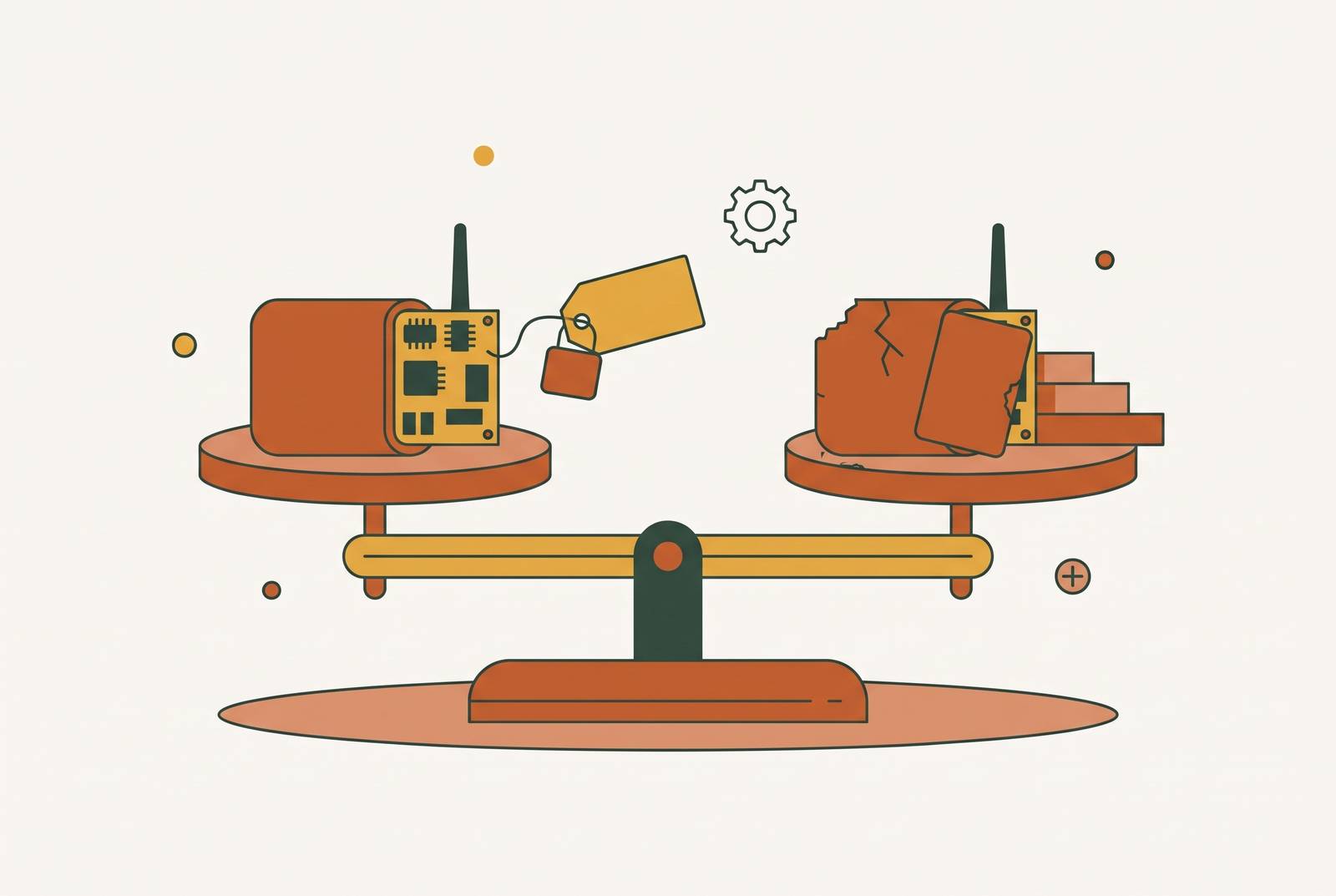
Agreed value fixes a prototype's payout in advance, but only if the appraisal holds up.
Inland marine coverage with agreed value is the starting point for insuring deployed robot fleets that work at more than one location or travel between job sites. For prototype and pre-production hardware, agreed value is a baseline requirement because actual cash value depends on replacement prices, depreciation schedules, and resale markets that often do not exist. A separate liability layer must cover third-party harm, with a check for AI exclusions that could remove that coverage.
Why prototype hardware is a structurally different valuation problem than standard commercial equipment
After a prototype is destroyed, the adjuster asks what it was worth. The company can explain what it spent, but there may be no commercial equivalent against which to test that figure. No active secondary market establishes a resale floor, and no recognized depreciation schedule describes how the unit loses value. The usual reference points are missing. A device that costs multiples of a comparable commercial product to produce may nevertheless be assessed through a framework built for ordinary equipment.
Standard equipment valuation assumes that an equivalent replacement can be identified, its depreciation estimated, and the result tested against a market. Prototype hardware may have none of these, so the settlement calculation may bear no relation to what the company spent. Handmade assets expose a similar weakness. Music Insured’s valuation guide explains why actual cash value can settle a fifteen-year-old PA rig for a fraction of its new cost, while that fraction becomes essentially arbitrary for one-of-a-kind or handmade items.
How ACV is calculated and why each step of the formula fails on bespoke hardware
Actual cash value, or ACV, is replacement cost new minus depreciation. The first step requires a defensible price for an equivalent new item. For a custom sensor array or a first-generation humanoid end-effector, an adjuster cannot obtain that price from a catalog because no equivalent is listed. A component invoice records the price of an input.
The second step applies depreciation to the replacement figure. Standard tables cover vehicles, office equipment, and manufacturing machinery, but they do not describe a robot that has undergone several rapid iterations without ever being sold. Age alone cannot supply the missing schedule. Applying a conventional equipment rate therefore introduces an assumption that has no recognized basis for that asset class.
The final check is against market value, where auction results or dealer quotes would ordinarily provide evidence. Hardware that has never changed hands outside its builder has neither. Akker’s production insurance guide illustrates the consequence of weak documentation in another bespoke setting, stating that undocumented props, sets, and wardrobe are paid at actual cash value at the carrier’s discretion. For prototype hardware, the absence of market evidence makes that discretion especially consequential.
The stated value trap: why “declared value” on a declarations page is not the same as a guaranteed payout
A declared figure can look like protection against this uncertainty without providing it. Stated value and agreed value may look almost the same on a declarations page, but they differ in what they require the insurer to pay. Stated value preserves the insurer’s right to pay the lesser of the declared amount or ACV at the time of loss. The declared number is only an upper bound. It does not prevent the adjuster from calculating a lower settlement through the same unsuitable valuation framework.
The distinction becomes more severe when the asset has no observable resale price. If a classic-car valuation is disputed, dealer comparisons and auction records can at least help test it, while a custom mobile manipulation platform has no such evidence. Declaring its build cost does not resolve that evidentiary gap. Public adjuster Leland Coontz’s analysis distinguishes an accepted agreed valuation from a stated amount that remains open to challenge. The practical instruction is to find and read the claims payment clause before assuming the declared number is protected, particularly where it says “lesser of stated value or actual cash value.”
What agreed value actually guarantees and what it requires the policyholder to do in return
The operator and insurer settle on the insured amount before a loss rather than leaving the figure for an adjuster to derive afterward. Coontz’s analysis explains that the carrier reviews the appraisal, accepts the valuation, underwrites the risk at that figure, and collects premium based on it. That acceptance forecloses a later argument that the property was worth less.
The agreement also changes the treatment of underinsurance. This protection comes with a documentation obligation.
The policyholder is therefore committing to maintaining evidence as the asset changes. Music Insured’s guide calls for a current written appraisal for items above a certain threshold and for vintage or handmade items, noting that a decade-old appraisal is usually low. Hardware that goes through rapid iterations has the same problem over a shorter development cycle.
Why the appraisal supporting an agreed value policy is the document that actually determines recovery
An understated appraisal can produce a fully compliant settlement that still leaves the company unable to fund a rebuild. The insurer has promised to pay the agreed amount even if rebuilding ends up costing more. There is no automatic catch-up mechanism. Replacement cost coverage pays actual rebuilding costs up to the policy limit, while agreed value leaves the policyholder to cover any shortfall when the accepted figure is too low to reproduce the asset.
For prototype hardware, an appraisal must therefore reach beyond the bill of materials. Components alone omit engineering labor, firmware development, sensor calibration, and integration work that constitute most of the asset’s value. A defensible package includes itemized build costs, engineering labor logs, software and firmware development costs, and component invoices, together with a technical narrative explaining why the unit cannot be reproduced at commodity cost.
Timing matters just as much because the appraisal describes a specific asset and cannot stand for that kind of hardware forever. The instrument guide recommends refreshing appraisals every three to five years or sooner when costs rise, while annually version-iterated prototypes require a shorter cycle. The production guide also requires an inland marine per-item limit high enough to cover the single piece worth the most. That figure must be documented and current. A standard equipment schedule naming the unit and listing a number cannot, by itself, establish either the completeness or the currency of its valuation.
What insurance covers autonomous robots traveling between job sites, and where does agreed value fit?
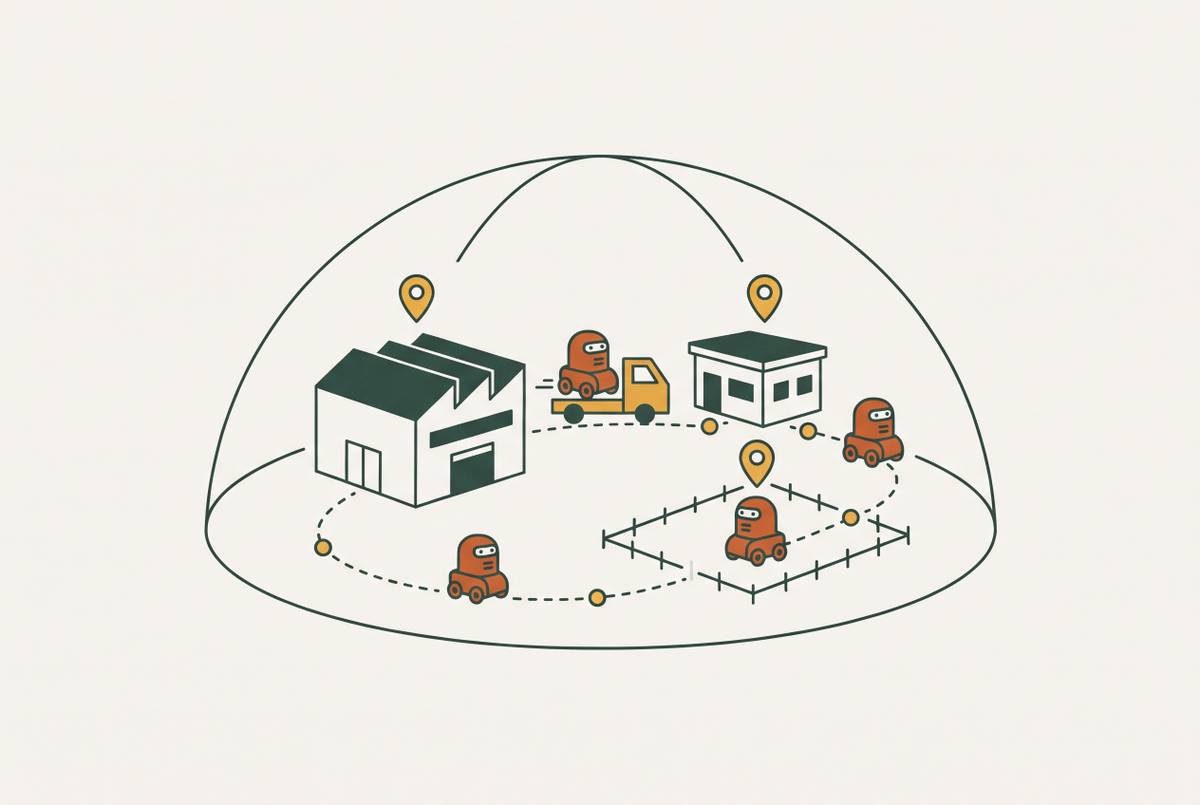
Inland marine is the appropriate starting point for autonomous hardware operating at customer sites, testing grounds, or in transit. Coverage follows equipment from place to place instead of covering the hardware only at a fixed premises. The production guide describes this structure through the Producer’s Package, which combines seven first-party coverages on an inland marine form. The location-to-location logic applies to deployed robot fleets. It addresses where the asset operates, while the valuation provision determines how its insured value is established.
Hotaling describes agreed value on the inland marine form as a fixed dollar amount for each unit that the operator and insurer agree on. That combination addresses mobility and valuation together. Standard commercial property coinsurance clauses, by contrast, penalize underinsurance, creating a difficult fit for hardware without market comparables. With inland marine agreed value, the agreed figure for each unit takes the place of that coinsurance calculation.
This first-party layer is distinct from liability insurance. General liability covers bodily injury and property damage to third parties. A hardware program therefore typically needs both layers. Confusing them can leave a destroyed prototype without asset coverage even when the company holds a substantial liability program.
How the AI exclusion wave hitting commercial policies in 2026 adds a second layer of exposure for autonomous hardware companies
A company can have a defensible agreed value schedule and still face exclusions across the policies intended to respond to an AI-driven failure. These are independent coverage questions. The first asks what the company would be paid for its own hardware, while the second asks whether insurance still covers liability from its use.
Verisk’s ISO filed three generative AI exclusion endorsements for commercial general liability, namely CG 40 47, CG 40 48, and CG 35 08, effective January 2026. CG 40 47 removes coverage for bodily injury, property damage, and personal and advertising injury “arising out of” generative AI under both Coverage A and B. The wording reaches across both coverage parts. Autonomous hardware companies need to read the endorsement text to understand their exposure because language about generative AI differs from broader AI exclusions.
Berkshire Hathaway, Chubb, and Travelers asked state regulators for approval to exclude AI-related damages from general liability policies, and regulators approved a large majority of those requests. The filings also extend beyond general liability. WR Berkley filed an absolute AI exclusion across its D&O, E&O, and fiduciary liability forms, removing coverage for claims tied to AI use, including governance representations by directors and executives. For autonomous systems companies, those changes affect the coverage lines implicated when perception failures, software updates, or control-takeover incidents cause third-party harm.
What a hardware company should do before its next renewal to audit both problems at once
The renewal audit should begin with the schedule of values and the current hardware versions. Each prototype and pre-production unit should have a per-unit agreed value on an inland marine form, supported by a current appraisal. A version mismatch requires action before renewal. If the appraisal predates the hardware now being insured, the figure must be renegotiated rather than carried forward as though the asset had not changed.
The next step is to test whether the documentation supports the scheduled amount. Build records and development labor should substantiate the technical narrative, so that the valuation can withstand scrutiny without market comparables. A component list is not enough evidence. Music Insured recommends a ten-minute annual schedule review for its audience, but a prototype representing many months of engineering requires proportionately greater rigor. The review must check what it costs to reproduce the unit as well as whether the schedule still lists it.
Read the claims payment clauses throughout the program, flagging any provision that pays the lesser of stated value or ACV. Review endorsements added at or since the last renewal for AI exclusions, together with AI-related sublimits on cyber or tech E&O policies. This review establishes both how an insured asset loss would be valued and whether an AI-involved liability incident falls within the remaining coverage.
The carrier submission should bring those findings together by accurately describing the hardware, its build cost, and how it operates. That specificity helps reach the right underwriters and obtain terms reflecting the actual risk, while a generic submission invites generic terms, including ACV and, increasingly, AI exclusions. A specialist broker should read the policies before they bind. The company must make these checks before signing the renewal. By then, the company needs an accepted valuation for its bespoke assets and a clear account of which liabilities its program still covers.