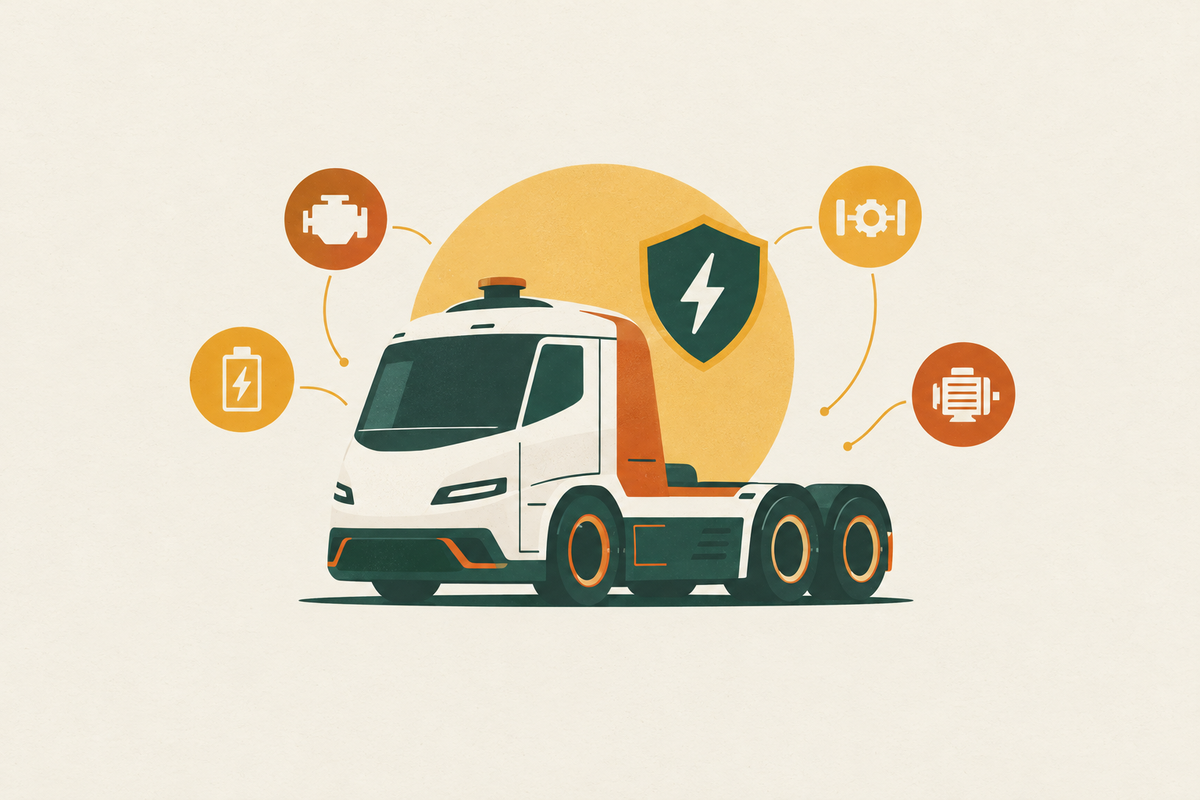
Floater Policies for Autonomous Hardware Deployed Across Customer Sites
A floater protects robot hardware, but software failures need separate cover.
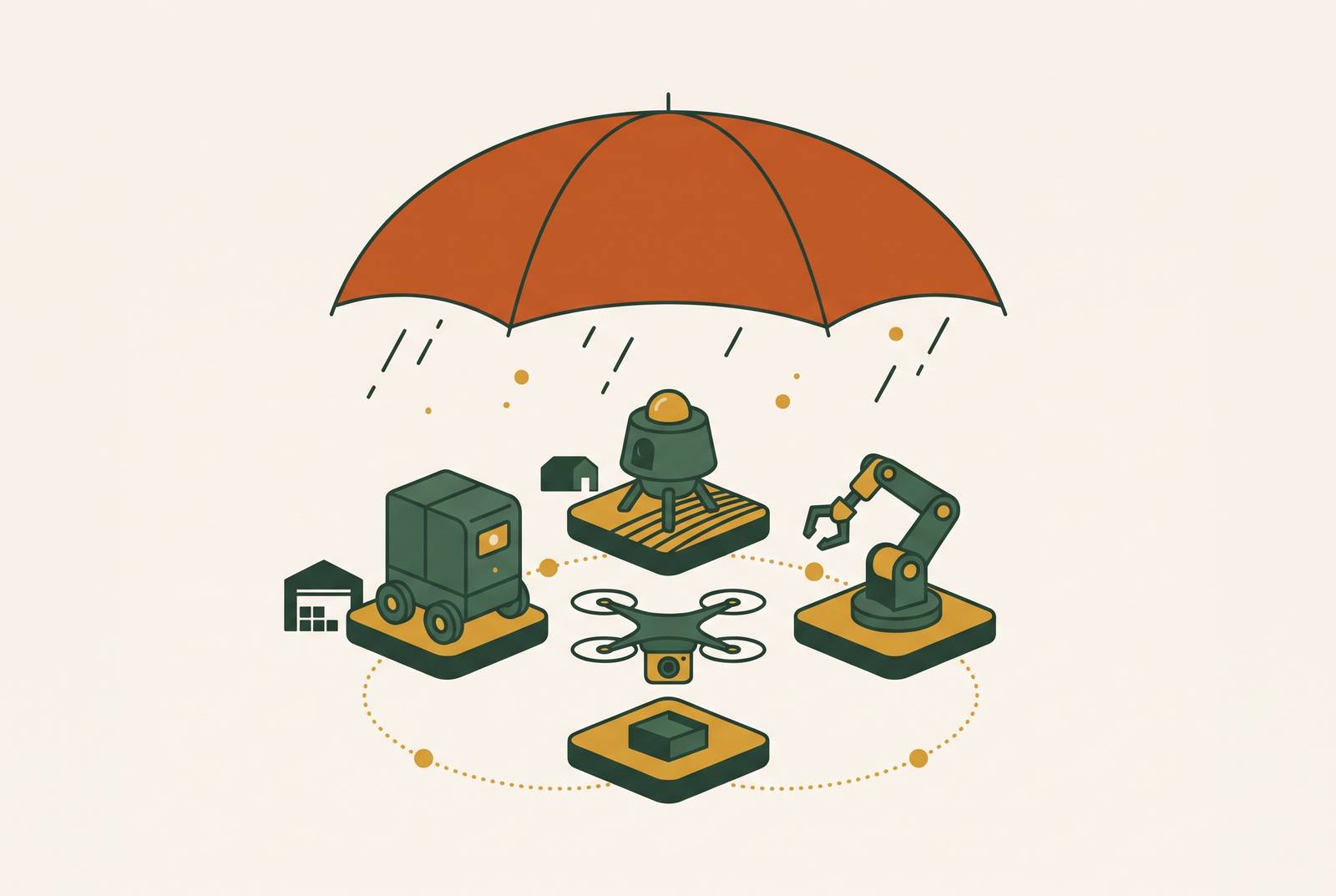
An equipment floater is the foundational form of inland marine coverage for deployed robot fleets because it follows the hardware between job sites. Its coverage is limited to the physical asset. To insure robots across customer locations, specialist placement must link the floater to coverage for software-driven failures, cyber-induced damage, and shifts in liability.
What insurance covers autonomous robots traveling between job sites?
Standard commercial property policies are written around a fixed premises. Fire, wind, and named-perils property forms cover a described location, so they do not fit hardware that moves between customer sites. Once a robot leaves the building listed on that policy, location-based protection no longer follows it. The address is the wrong anchor for deployment.
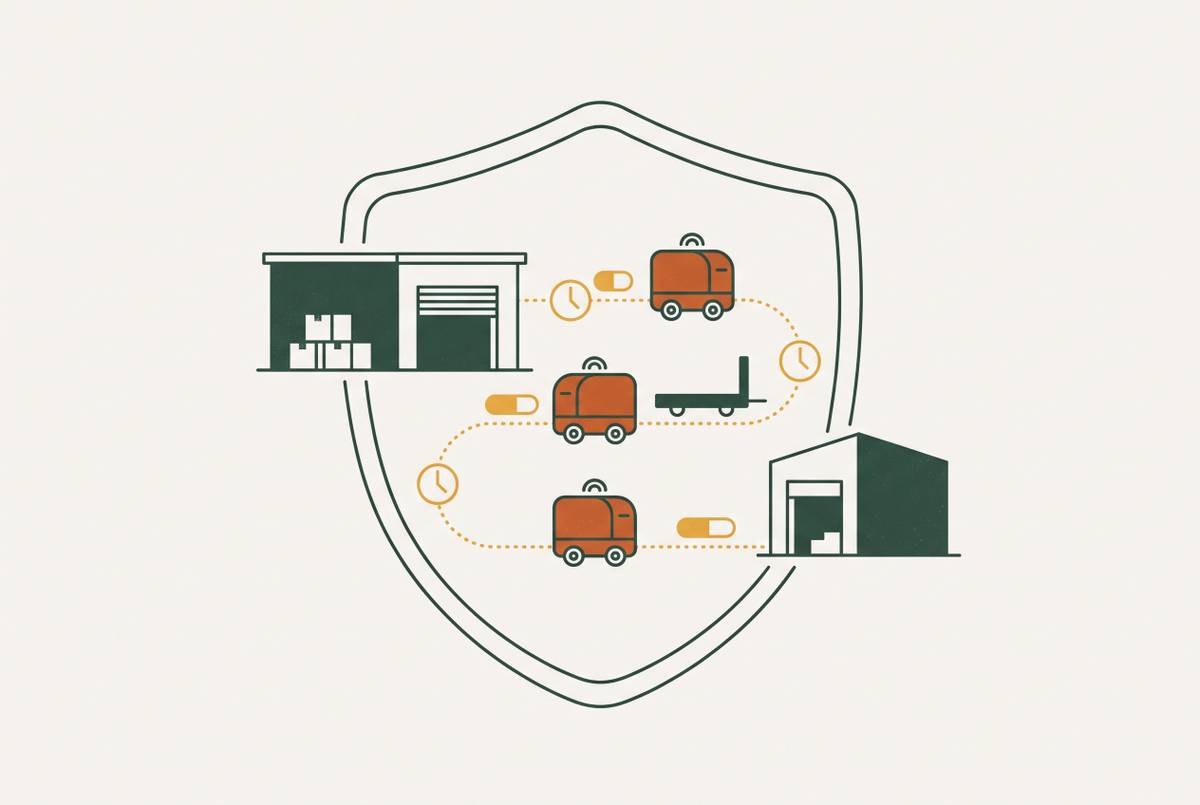
An equipment floater instead anchors coverage to the asset. Each scheduled item is identified by make, model, serial number, and value, allowing coverage to follow the equipment within the policy’s terms and territory. The floater is a configuration of inland marine insurance, a category with a long history of covering property in transit and at temporary locations. For a robot fleet operator, it supplies the physical-asset layer against loss or damage at customer sites and between them.
What a standard floater was not designed to cover — and where the gaps appear immediately for autonomous hardware
A standard floater’s boundary is damage to the insured hardware. If a robot injures someone or damages a customer’s property, the resulting liability claim sits outside the floater. An AI perception failure can also stop a customer’s production line without damaging the robot at all. A standard floater does not respond to those production losses.
Even damage to the robot can encounter exclusions. Standard exclusions leave out mechanical breakdown, wear and tear, damage during repair, and improper use. Those categories become harder to apply when distinguishing a malfunction originating in a software decision from one originating in a snapped gear. The distinction affects whether an otherwise familiar equipment loss falls within the policy. Autonomous operation introduces uncertainty into both the cause of loss and its consequences.
Rented or borrowed equipment may be omitted from the schedule, while blanket limits left unchanged as a fleet grows can leave newer units underinsured. Geographic wording can create another mismatch if it does not encompass the actual deployment footprint. Domestic-only territory excludes cross-border deployments, while any narrower geographic restrictions require attention for out-of-state work. Mobility in the coverage form does not mean unrestricted geographic coverage.
How deploying robots across customer sites multiplies the risk variables a floater was never priced to handle
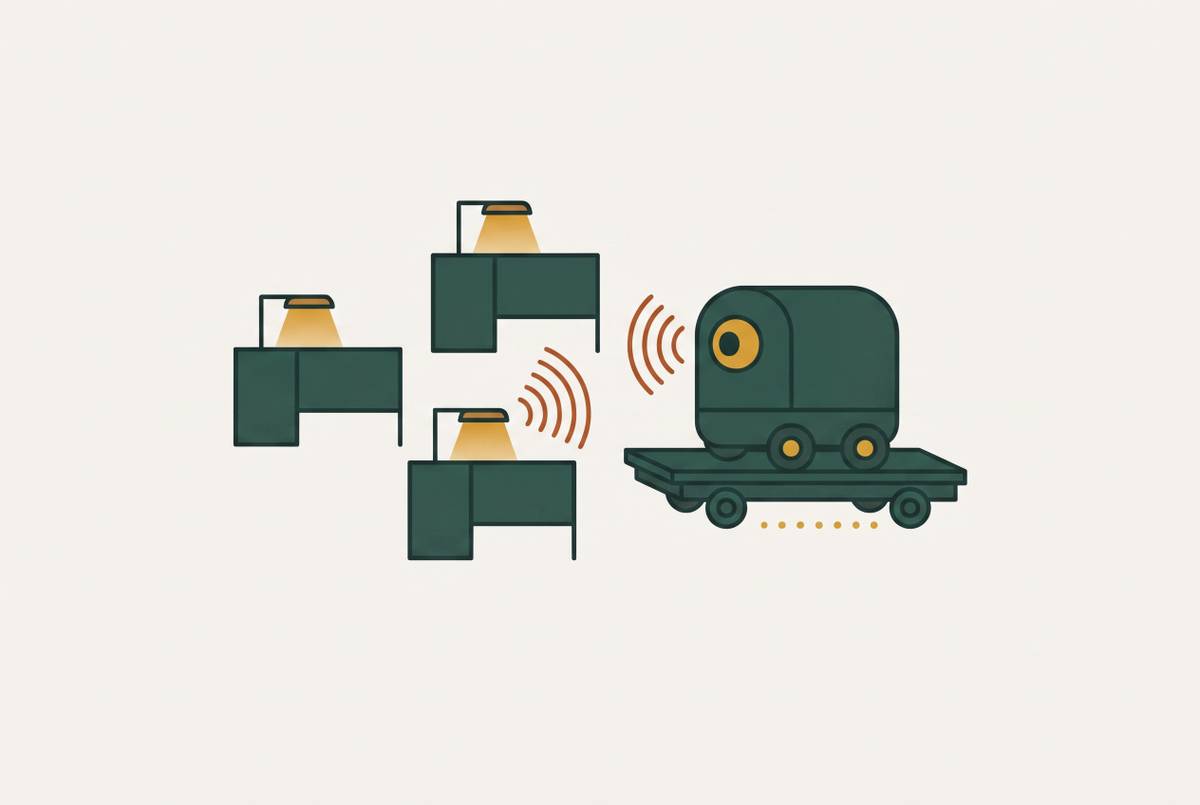
The same robot can pose different risks in different warehouses. Floor layouts, how workers interact with the robots, ambient conditions, and operating rules change from customer to customer. Unlike a fixed machine executing a preset command, an autonomous system acts on sensor data and model outputs that change with its surroundings. Software updates and operating parameter changes can then alter its behavior after the policy is bound, potentially without notification to the insurer.
Liability changes with that operating context as well. The hardware maker, AI software vendor, sensor supplier, and site operator may each bear part of the responsibility for an incident. Contracts allocating their duties do not prevent claims against several parties at once. Meanwhile, a flaw in a widely deployed AI model can affect every unit running it across customer sites and jurisdictions. That accumulation risk differs fundamentally from the localized perils for which conventional floater premiums were calibrated.
PICC’s coverage of AGIBOT’s Sharebot fleet since December 2025 illustrates the deployment model insurers are beginning to address. The machines rent for roughly 3,500 yuan a day and move between customers without one fixed address where they work. Coverage therefore needs to follow the machine to customer locations and be priced per unit of deployment. The example shows a structural response to roaming hardware. It does not establish that the associated software, accumulation, and liability problems have been resolved.
Why the surrounding coverage lines — general liability, tech E&O, cyber — do not automatically fill what the floater leaves open
General liability is the relevant line for third-party bodily injury and property damage, but holding that policy does not establish that every autonomous failure is covered. The same distinction applies to technology errors and omissions insurance. Tech E&O covers losses from errors in technology services or products, but its current wording was not written for AI’s probabilistic decisions. Insurers are increasingly introducing carve-outs targeting those outputs.
Cyber-induced physical damage exposes a particularly clear seam. A cyberattack that takes over a robot’s controls may cause property damage excluded by the property policy’s cyber wording. The cyber policy may then exclude the same loss because it involves property damage. Both policies can exist without either responding to that damage. Program breadth is therefore different from continuity of coverage.
Directors and officers policies are also beginning to include broad AI exclusions, extending the issue to fleet operators’ leadership. AIG and WR Berkley sought regulatory approval for forms containing broad AI exclusions. WR Berkley’s proposed language reached claims involving “any actual or alleged use” of AI. If deployed, wording that broad could remove protection from significant parts of a robot operator’s business under standard forms. The analytical task is to examine how policies meet at the loss, rather than treating each purchased line as a completed requirement.
What specialist robot-specific policies cover that the standard program cannot, and where even those products stop
Axis Insurance built a program for companies that make and deploy autonomous robots, addressing failures that cross conventional policy boundaries. Its scope includes bodily injury and property damage from AI navigation or perception failures, plus physical damage from a cyberattack taking over a robot’s controls. It also addresses production losses when a software update or sensor failure takes a unit offline without physical damage. Third-party sensor defects are another target when the resulting claim lands on the integrator.
Other specialist structures address different parts of the problem. Relm Insurance launched PONTAAI as an excess wrap above existing cyber, professional liability, and general liability programs to cover AI-specific gaps. Marsh and Apollo’s ibott built a liability facility for Uber that brings primary and excess coverage for AV developers, fleet operators, vehicle manufacturers, and original equipment manufacturers into a single master policy. Mosaic Insurance teamed up with Munich Re’s aiSure to cover financial losses from AI performance failures, so vendors can back performance warranties without keeping all the liability on their own balance sheets.
None yet covers the full liability chain that an autonomous hardware incident can trigger. They also lack decades of actuarial history, published failure-rate baselines, and standardized diagnostic-coverage reporting against which to price risk. Specialist products are being written ahead of the data. These products allow placement to be tailored to the operator, but each structure still needs to be checked for what it leaves uninsured.
Why contractual indemnity provisions in customer site agreements do not substitute for properly structured coverage
Indemnity allocates responsibility between parties, while insurance finances covered losses. Those functions are related but not interchangeable. Standard AI vendor agreements commonly provide indemnification for third-party intellectual property claims, while capping total liability, including indemnification, at a fixed period’s worth of fees. A cap tied to a modest enterprise fee can fall far below the damage from a serious incident. The existence of an indemnity clause therefore says little about the amount recoverable after a catastrophic loss.
Payment capacity imposes a separate practical limit. A startup robot maker without the balance sheet to fund a major claim cannot honor an obligation running into the hundreds of millions if its insurer denies coverage. At the same time, more customer agreements call for specific insurance lines, minimum limits, and additional insured endorsements. A program with only a floater cannot meet requirements for liabilities that go beyond the hardware itself.
Autonomous insurance management must use customer indemnification agreements, software license terms, and hardware supply chain records to work out how liability is shared. Those documents show duties that a property schedule alone cannot show. Their role is to inform the coverage structure before a loss.
What a floater built for autonomous hardware actually needs to include — and why that requires specialist placement
Placement starts with an asset schedule that is correct and kept up to date. Units added after inception must be added to the floater, and blanket limits must be revisited as the fleet grows. Rented and borrowed equipment also needs to be explicitly accounted for in the coverage. These disciplines must continue after inception. Without them, a correctly chosen coverage form can still protect less equipment than the operator has deployed.
Territory must explicitly encompass every jurisdiction where the hardware operates. Cross-border deployments also introduce regulatory requirements that can affect the coverage position, including the EU AI Act’s extraterritorial reach. The placement must reflect both where the machine goes and the obligations attached to its use there.
Autonomous-specific protection then requires deliberate negotiation of endorsements and the surrounding program architecture. AI navigation or perception failures, cyberattack-driven hardware damage, and production loss from software updates cannot simply be assumed covered. Some of these exposures extend beyond the floater’s physical-asset function and require connected protection elsewhere in the program. A broader label on the floater is not enough.
The underwriting submission must describe operating environments, software update cadence, human interaction protocols at each site type, and the contractual liability structure. Generic equipment forms do not provide the fields or framework to elicit that information. A specialist submission instead explains how the machines behave and where they operate, rather than classifying them as equipment equivalent to a forklift. Submission quality affects both premium and coverage.
How the coverage market for autonomous hardware will continue to evolve — and what that means for operators placing coverage now
The standard market is excluding AI-related losses faster than specialist products are opening protection, while commercial autonomous deployment accelerates. Physical AI has few coverage options, and its actuarial models are still at an early stage. Cyber insurance was in a similar position before years of claims history helped that market grow. That comparison explains the need for evidence. Robot coverage remains constrained by what insurers can confidently quantify.
The constraint also affects deployment economics. Until fleets can be insured at reasonable premiums, operators face unquantified liability. Without a price for that liability, safety investment’s status as a commercial prerequisite can be obscured, making it appear discretionary. Insurance development therefore depends on more than adding new policy names. It requires a record that connects operating conditions, failures, and claims to the exposures being underwritten.
Operators placing coverage now under specialist programs can accumulate claims and incident history that makes future renewals more competitive. Generic placements leave them confronting the same underwriting uncertainty without a record that adequately describes the autonomous exposure. The practical implication is to build specialist placement discipline at the first deployment. Getting the structure right now establishes not only present protection, but the data record on which viable future placements depend.