Why Inland Marine Underwriters Who Write Robot Fleets Ask Different Questions Than Any Equipment Floater Desk Will
Robot fleet underwriters price software authority and evidence, not just replacement cost.
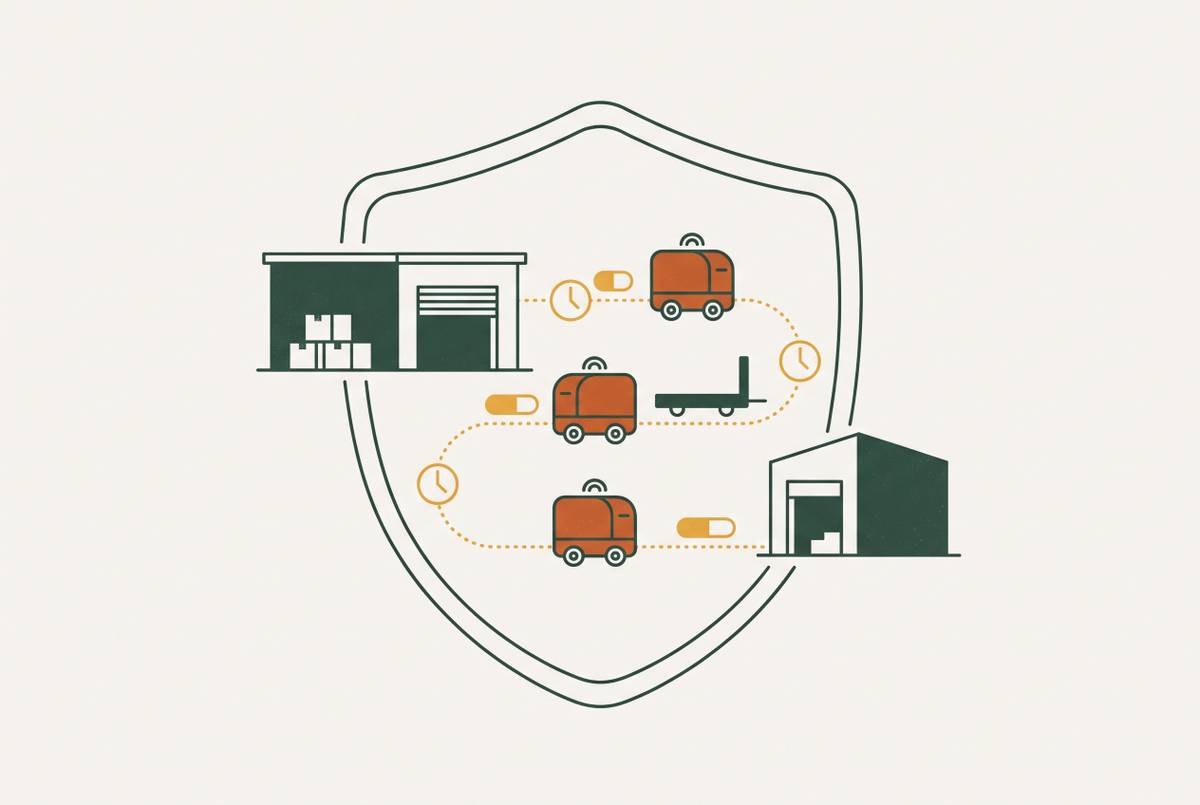
Inland marine coverage for deployed robot fleets can cover physical assets that move between job sites and work at more than one location, under the policy’s terms. But a conventional equipment floater does not, by itself, resolve the risks of autonomous operation. Effective robot fleet underwriting puts software authority, communication architecture, and operational evidence first, rather than treating the fleet as a schedule of replacement costs.
What inland marine insurance actually covers, and where equipment floaters sit within it
Inland marine is a broad coverage category. It has historically followed property wherever it moves, including cargo in transit, contractors’ equipment, and scheduled tools. Equipment floaters are a workhorse form within that category, pricing physical assets through replacement-cost schedules and standard peril triggers. Their basic underwriting sequence is to identify the asset, assign a value, set a deductible, and establish coverage for perils such as theft, fire, and collision. The asset’s internal software is not a rated variable.
Robot fleets enter this process for understandable reasons. They are expensive, mobile, and deployed in the field, which are the same surface characteristics that have long directed equipment toward floater coverage. For an operator insuring robots across multiple locations, that makes inland marine a relevant category, but it does not establish that any equipment floater is suitable. The distinction is between a coverage category and a particular underwriting framework. A robot fleet looks like equipment to the submission intake system, yet behaves and fails in ways conventional floater rating was never designed to capture.
Why the conventional equipment floater desk has no framework for autonomous behavior
A conventional equipment floater underwriter asks about physical condition, operator certification, storage location, and replacement cost. Those questions describe the property and its handling. They do not establish what a robot may decide independently, what controls limit those decisions, or which external systems it may modify. The central autonomous-system question is therefore not whether the organization uses AI. It is what authority the organization has delegated to the system, and under what constraints that authority operates.
That distinction changes the object being priced. Degree of autonomy is a first-order rating variable because it influences both claim frequency and claim severity. A replacement-cost schedule can describe the financial value of a damaged robot without explaining the behavior that produced the damage. Likewise, an operator’s certification does not establish when the software must return control to that operator. A form that omits these relationships leaves the principal sources of autonomous loss outside its rating logic.
The more serious mismatch is fleet-wide accumulation. A software fault, cloud outage, or navigation error in a widely deployed platform can affect thousands of devices simultaneously. A shared dependency can connect losses across locations, even though the machines appear separately on an asset register. Conventional floater pricing models built around cranes and excavators have not stress-tested this kind of catastrophic software-driven scenario.
How marine underwriters learned to treat software as the primary risk — and what land-based robot underwriting can borrow from that
Autonomous vessel insurance in Europe shows how insurers have dealt with this risk. Automated inland navigation is coming into commercial use, so insurers must build frameworks without a long record of similar losses to draw on. The German Insurance Association’s position paper states that insurers are prepared in principle to insure automated ships, but require full access to high-quality, accurate operational data from insured vessels. That requirement changes the basis of the insurance relationship. Insurers use operational evidence in underwriting, rather than asking for it only after something goes wrong.
Marine liability reinsurers put that principle to work by checking the technology. They audit the remote-operations architecture, review the testing of sensor and collision-avoidance software, and assess the communication-link redundancy and fail-safe design. They also check remote-operator qualifications, verify incident-log integrity, and map accumulation across operations centers that vessels share. These checks show how system design can lead to losses and what evidence would help explain them. The work looks like technology due diligence because a vessel’s physical features alone cannot show how it will perform under autonomous operation.
Regulation is pushing in the same direction. The Flemish Government approved a decree in October 2025 permitting automated and remotely controlled inland vessels to operate commercially. Companies must prove that their vessels are as safe as conventional ones through technical data, risk analyses, and possibly pilot results. HGK Shipping then received a one-year test permit in January 2026 for remote control of the chemical tanker WALCHEREN on designated waterways east of Antwerp, the first such permit in Flanders. Such deployments provide live operational data from which underwriting evidence can develop.
Important liability questions nevertheless remain open. Marine underwriters are examining who is legally navigating when a vessel is controlled from a Shore Control Centre, and how responsibility divides among the shipowner, remote-operations-centre operator, and technology provider. They must also establish causation when system failure and human intervention are intertwined, while assessing whether remote operation increases cyber aggregation risk. Land-based robot fleets present the same allocation and causation problems. The useful precedent is that marine insurance has identified the technical evidence needed to address these questions.
The specific questions a software-aware underwriter asks that a floater desk never will
A software-aware underwriter treats hardware as context and the software stack as the rated object. Delegation of authority comes first because it defines the system’s permitted conduct. The underwriter needs to know which decisions require no human intervention and under what conditions control returns to a person. That boundary affects the potential loss, but it also affects how a later claim is understood. When autonomous action and human intervention overlap, a description of the machine alone cannot show who controlled the decision in question.
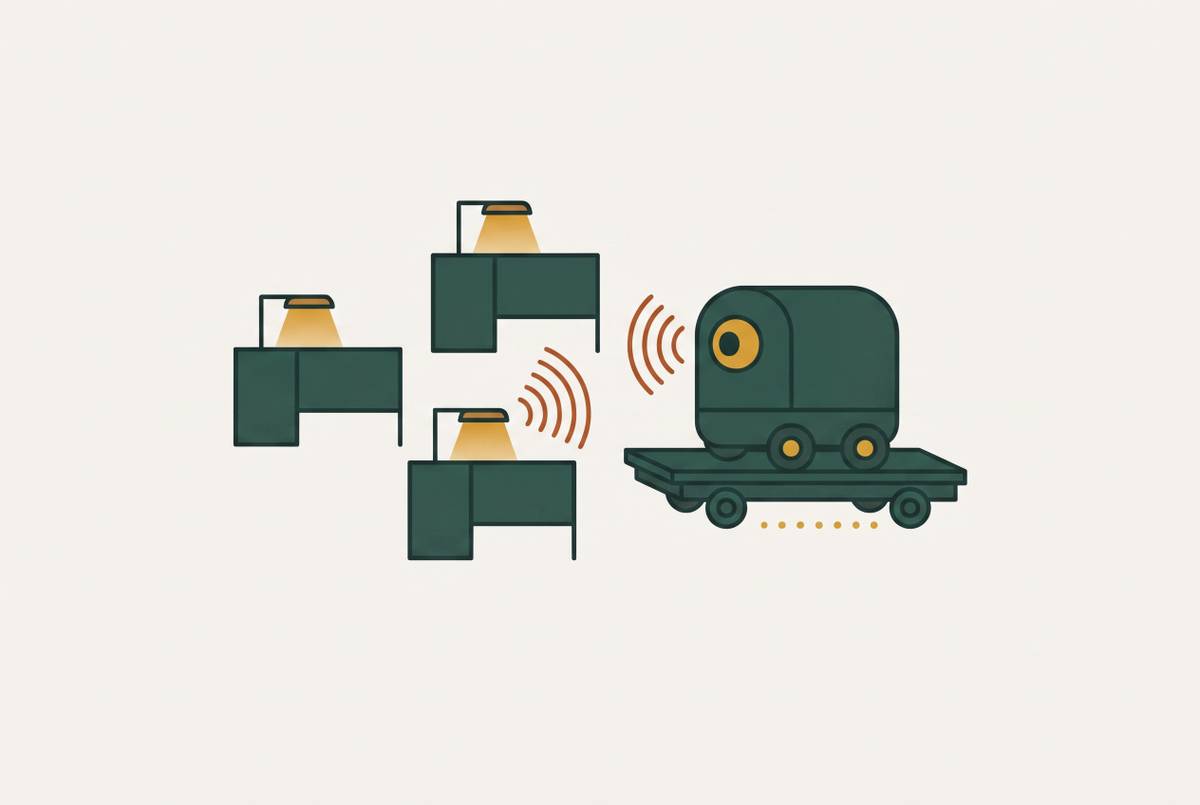
Communication architecture defines another boundary of control. Underwriters assess what happens when the link between a robot and its remote-operations center is degraded or lost. Link redundancy and fail-safe design determine how that exposure is constrained, so they belong in pricing. Remote-operator qualifications complete this part of the assessment by establishing the training and certification standards for people who may intervene. The existence of a remote operator does not, by itself, describe the reliability of the intervention arrangement.
Sensor and collision-avoidance testing provides evidence of how safely the robot can operate. Underwriters need the testing conditions and documentation. This evidence informs claims assessment. An operator needs incident-log integrity to reconstruct what the system did and why after physical damage occurs. Proof that logs exist and cannot be altered supports the assessment of causation when software behavior is disputed.
Deterministic safeguards address the possibility of runaway execution cycles. Underwriters need proof of architectural controls because a broad claim about supervision does not show what stops uncontrolled execution. Without that proof, the operator faces the prospect of coverage denial or a prohibitive premium penalty. Software version-control governance addresses a related but distinct exposure, namely how changes reach the fleet, who approves them, and what rollback capability exists. Reinsurers identify a software update as a potential trigger for simultaneous fleet-wide loss.
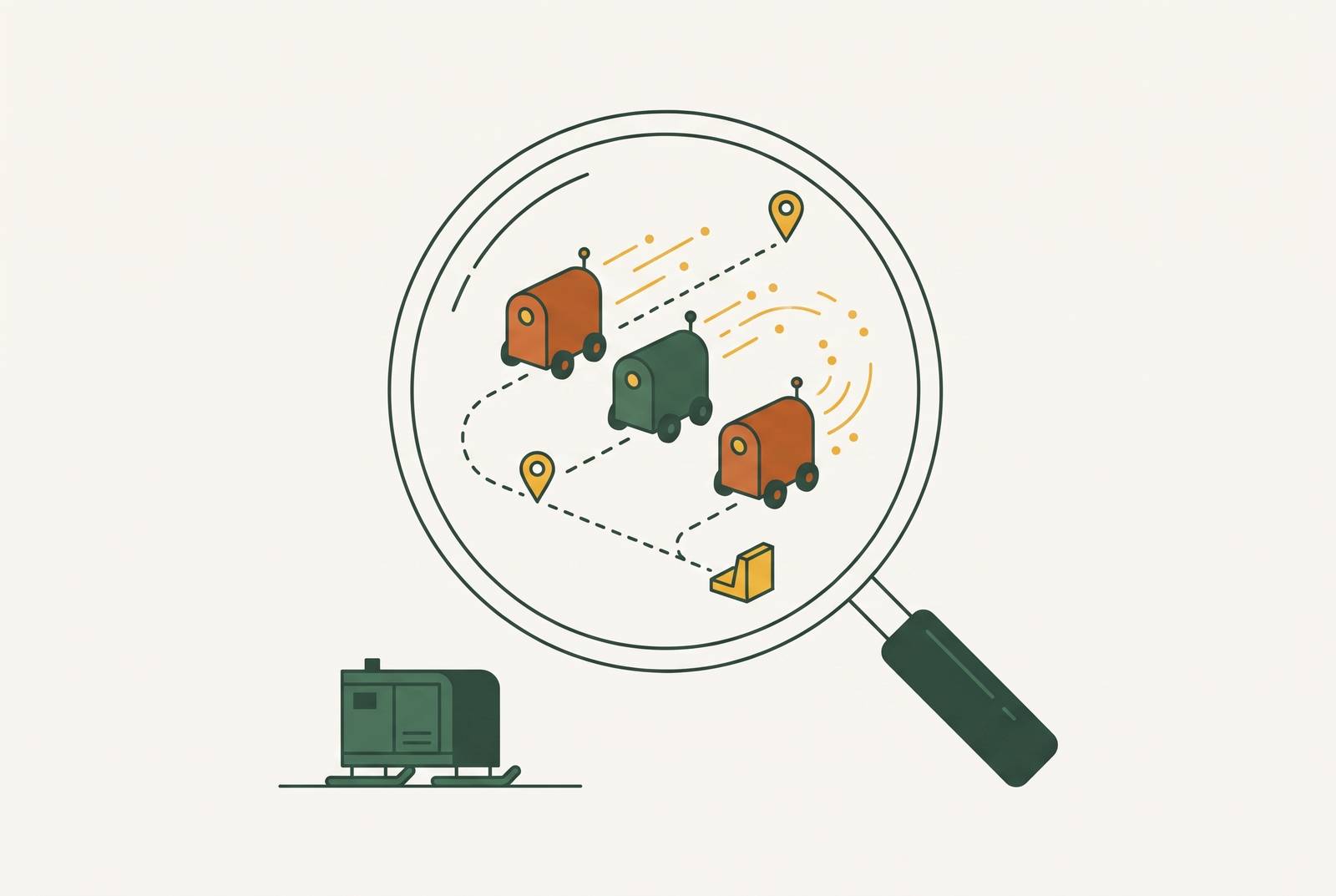
Accumulation mapping connects these individual controls to the portfolio. The underwriter needs to know how many devices share an operating system, AI model, or software supplier. A fleet in different locations may still rely on the same software, just as several vessels may rely on a shared operations center. Those shared dependencies can turn one fault from a limited claim into a catastrophic loss across the portfolio. Together, authority, communications, testing, logs, safeguards, update governance, and shared dependencies explain both how losses can occur and whether they can be reconstructed.
How the AI exclusion wave changes what a robot fleet operator can actually rely on at claim time
Standard commercial lines were not designed around systems that blur the hardware and software boundary, and exclusion filings are making that limitation explicit. A physical incident can therefore raise a coverage question about its software cause. This is the downstream consequence of treating autonomous equipment as ordinary property without examining the full placement. The underwriting may describe a machine, while the exclusion applies to the decision-making system involved in its loss.
ISO published three standard generative AI exclusion forms for commercial general liability in July 2025, namely CG 40 47, CG 40 48, and CG 35 08. Three related umbrella/excess forms brought the filing to six forms in all. The broadest CGL form, CG 40 47, excludes bodily injury, property damage, and advertising injury for claims that “arise out of” generative AI. The connection is the operative trigger. It does not depend on generative AI performing most of the work.
That breadth can reach beyond an obviously AI-first operation. A contractor using AI for one estimate on an otherwise conventional job could find that a later project claim falls within the exclusion. For robot fleets, the corresponding question is whether navigation or decision-making involves technology within the exclusion’s scope and whether the claim has the required connection. These exclusions are specific to generative AI. They are also liability forms, so their presence does not by itself determine what a separate inland marine policy covers.
When ISO addressed cyber risk in standard CGL policies, standalone cyber insurance was available to buy back the exposure. Several non-admitted and Lloyd’s-backed standalone products are now on the market, but there is still no broadly available admitted standalone product for the excluded AI exposure in autonomous hardware operations. A generalist placement can consequently appear to address a hardware incident until an applicable AI exclusion defeats the claim. Specialist placement addresses that risk through forms that affirmatively address autonomous operations, rather than relying on the equipment description to imply protection.
Why submission quality is the controlling variable for robot fleet coverage outcomes
The right desk still needs usable evidence. Underwriting outcomes for autonomous systems depend more and more on exposure quality, documentation, and how much the underwriter can trust the submission data. Carrier underwriters have more accounts to choose from than in prior years and use submission quality as a proxy for account quality. A clear, full account of the technical architecture gets a serious look. Missing data, internal inconsistencies, and attachments that require repeated follow-up instead encourage a quick disposition, rarely on the best terms.
For robot fleets, the core evidence is technical. Continuous telemetry tracking, automated intervention mechanisms, and deterministic safeguards are not supplemental material appended to a conventional equipment schedule. They demonstrate how autonomous operations are observed and constrained. Delegation of authority, communication architecture, incident-log governance, and accumulation mapping give that evidence an intelligible structure. Without those links, even a submission with a great deal of technical documentation may fail to explain the risk the underwriter is being asked to accept.
Classification must also match the actual exposure. NAICS misclassification is a common failure because the wrong class code produces the wrong rate and appetite assessment before the technical review can do its work. Carrier AI platforms are catching more of these errors during pre-bind review. When misclassification is caught after binding, it can lead to a post-bind audit and a premium increase.
The practical implication is to build the submission around these underwriting variables or work with a broker who already knows which questions the specialist desk will ask. Broker commissions are already embedded in the premium whether a generalist or specialist places the policy, making this a coverage-quality decision. An equipment schedule establishes what the fleet is worth. A submission built for autonomous operations establishes what the fleet can do, what constrains it, and what evidence will exist when a claim occurs. That is the basis for distinguishing coverage that responds from coverage that only appears adequate before a loss.