Recall Trigger Definitions and the Government-Initiated vs Voluntary Distinction
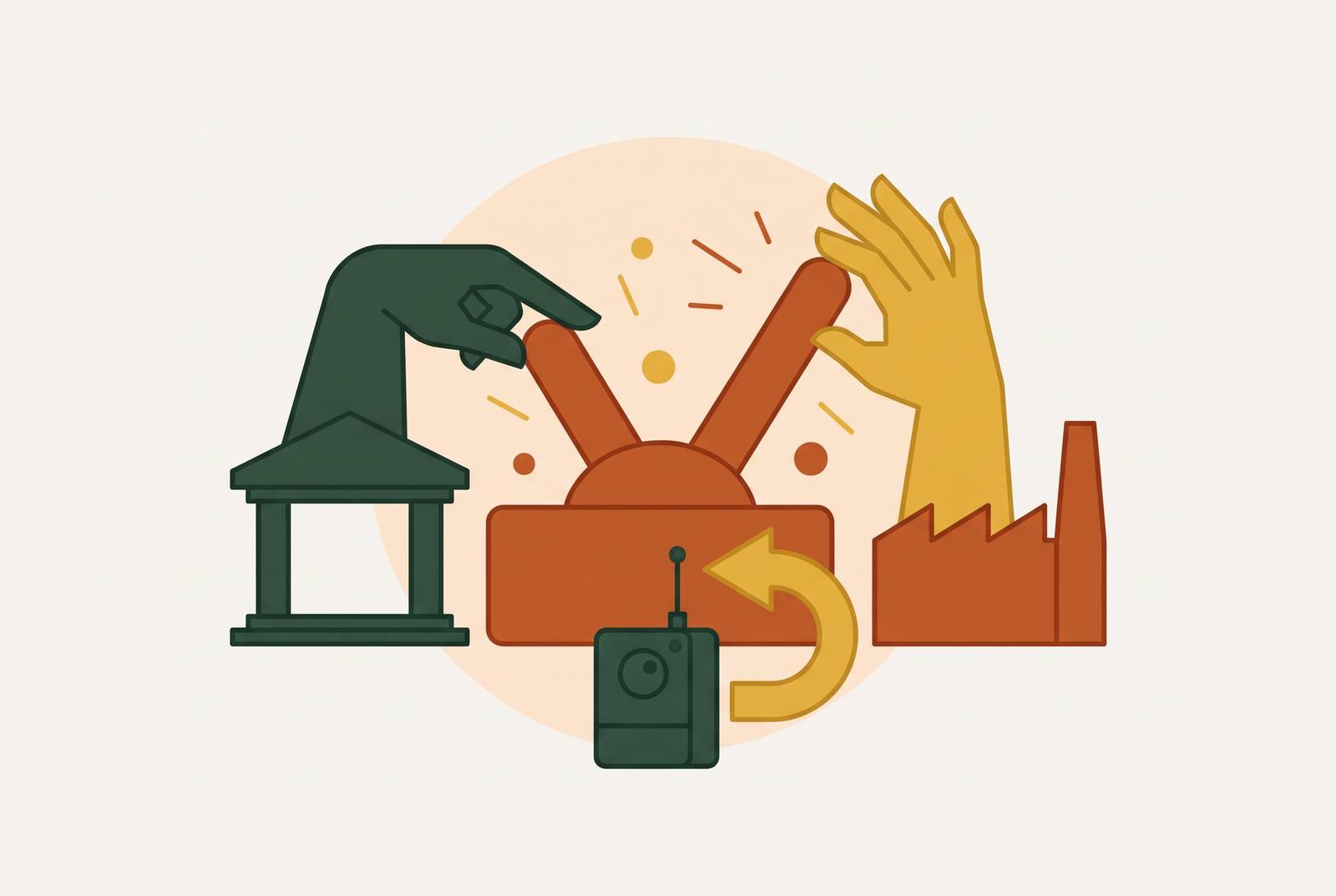
Insurance responds when a company withdraws an unsafe product before a regulator acts only if the withdrawal meets the recall trigger definitions. For autonomous hardware companies, the government-initiated versus voluntary distinction is an operational coverage issue. A policy must capture proactive safety action, or the decision to ground a fleet before anyone is hurt may leave the withdrawal costs uninsured.
Why product recall insurance has a gap that general liability never fills
The assumption that general liability covers a company’s product confuses liability for harm with the expense of preventing it. General liability and product liability cover third-party harm after it occurs. They do not pay simply because a company pulls back a potentially unsafe product. The standard ISO commercial general liability form makes that boundary explicit through exclusion n, the sistership exclusion, which removes coverage for withdrawal, recall, inspection, repair, or replacement of the insured’s own product. The exclusion applies whether the FDA ordered the recall, the company acted voluntarily, or anyone was injured.
Lot tracing, regulator notification, distributor and consumer outreach, freight, quarantine warehousing, and inspection labor are costs of managing the withdrawal. Certified destruction, replacement stock, and overtime to keep production running add to that bill. None is itself bodily injury or damage to someone else’s property, so none triggers the liability policy. The two coverage lines are therefore partners, with product liability handling the injury claim and recall insurance handling the event that precedes or surrounds it.
What recall insurance actually pays for, and how first-party and third-party coverage divide the bill
A well-structured recall policy pays for notification to customers, distributors, and regulators, including press and web notices. It also covers inbound and outbound freight, warehousing and quarantine, sorting, inspection, rework, replacement stock, and certified destruction. The policy can also pay for overtime, temporary labor, crisis management, and PR consultants. Yet retrieval is not usually the largest cost. Lost gross profit is typically the largest line in most claims because weeks or months without sales during a shutdown cost more than moving and destroying the goods.
Customer chargebacks introduce a different kind of expense. These debit memos ask the company to pay handling fees, restocking charges, and shelf-clearing labor. They are contractual claims rather than tort claims, so general liability does not cover them. Better recall policies address chargebacks and lost gross profit through separate insuring agreements with their own sublimits. Their treatment determines how much of the commercial disruption remains with the recalling company.
First-party recall expense covers the recalling company’s own notification, retrieval, destruction, replacement, and lost profit. Third-party recall liability covers a customer’s recall bill when the insured’s component caused the withdrawal of the customer’s finished product. The exposure extends from the component to the assembly. Most manufacturers need both, but component suppliers often underbuy third-party coverage relative to their downstream exposure. For an autonomous hardware supplier, a sensor, firmware module, or perception system may represent only a fraction of the value of the platform being recalled.
How trigger definitions actually work — and why "government-mandated" alone leaves most recalls uninsured
Those expense categories describe what a recall policy can pay, but the policy responds only if the recall meets its trigger. A large limit cannot cure an event that falls outside the definition of a covered recall. Trigger wording therefore deserves more attention than the limit. Recall forms commonly have three standard trigger categories, which are accidental contamination, malicious tampering, and government-mandated recall. They are often sold as though they provide one undivided grant of protection, although each captures a different cause or basis for withdrawal.
Accidental contamination addresses unintentional contamination, mislabeling, or a production or storage error that makes a product unsafe or unfit for use. It is the workhorse agreement in food and beverage but is applicable to manufacturing defects beyond those industries. Malicious tampering addresses deliberate contamination or alteration by a third party, including sabotage, extortion, and adulteration, and is often bundled with product extortion coverage. Government-mandated recall instead turns on an agency’s action. That trigger applies when the FDA, USDA FSIS, CPSC, or NHTSA orders or formally requests a recall.
The distinction between an order and a request is substantive. Most FDA food recalls are technically voluntary, conducted under agency pressure without a formal legal order. A form that requires a formal mandate can therefore exclude the industry’s most common fact pattern. Including “requests” allows the government trigger to reach beyond compulsory orders. It does not, however, make that trigger equivalent to coverage for a company’s independent decision to withdraw a product before an agency intervenes.
Broader forms cover a company that acts on its own through a fourth category, a voluntary recall made in good faith to prevent injury. This is a separate route to coverage. Most manufacturers and operators move before a regulator does, so a standalone voluntary trigger connects the policy to how safety decisions are actually made. A company that self-initiates a withdrawal before the CPSC issues an order needs government wording that includes “orders or requests” at minimum, and ideally explicit protection for a good-faith voluntary withdrawal.
A formal-order-only policy creates the opposite incentive. The company that waits for an order can satisfy the government trigger, while the company that pulls the product first may not. For placement purposes, the lesson is to negotiate the voluntary good-faith language rather than assume that a policy described as recall insurance includes it. The distinction is especially consequential when the company’s safety process is designed to act before either injury or regulatory intervention.
The bodily injury trigger trap — how one word shifts the threshold for coverage
Even a form with a suitable trigger structure can impose an unsuitable evidentiary threshold within its accidental contamination agreement. One version uses “would result in bodily injury or property damage,” a reasonable-belief standard based on credible evidence that harm was possible. Another uses “has resulted in bodily injury or property damage,” which requires harm to have occurred. The difference changes when the company can act with coverage. It is not merely a different description of the same loss.
A precautionary shutdown exposes the distinction clearly. In-process contamination evidence may cause a company to stop a production line even when a swab result finds nothing in the finished product. The “would result” standard accommodates action on credible evidence before injury, while “has resulted” demands the harm the shutdown was intended to prevent. For autonomous hardware, much the same thing happens when a fleet operator grounds robots after a sensor anomaly appears in telemetry, before any incident. Component failure endorsements address a related boundary by extending accidental contamination coverage to defective third-party parts when the supplier, rather than the operator’s own quality system, introduced the defect.
Why autonomous hardware creates recall exposures that standard trigger definitions were not written to capture
The same trigger mechanics become harder to apply when the defect lies in software that governs physical behavior. Autonomous hardware failure modes do not map cleanly onto accidental contamination, malicious tampering, or government-mandate definitions. A firmware or software defect can fall between general liability, which looks for physical harm, and tech E&O, which looks for a technology service failure that causes a third party to lose money. Recall insurance is designed to pay the withdrawal cost. Its contamination wording, however, was written for physical products rather than algorithmic decisions that cause hardware to behave incorrectly.
When an autonomous logistics or field system executes a command that causes physical harm, the event can be a general liability claim, a tech E&O claim, and a potential recall simultaneously. Each policy may point elsewhere for the withdrawal expense. A cyberattack can compound that gap if a property policy excludes cyber-related damage while a cyber policy excludes physical damage. The recall of the affected fleet may then go unpaid under both policies, even though the event involves both digital control and physical loss.
A voluntary fleet grounding brings the problem back to the trigger itself. An operator may pull units after an anomaly appears in telemetry, before any regulator issues an order. No government action has yet supplied the trigger. If the form also calls for actual harm or leaves out the defect that caused the withdrawal, the operator has more than one hurdle to clear to get paid.
How underwriters assess recall risk for autonomous hardware — and what that means for submission quality
Getting wording that covers those cases depends on how clearly the company explains the risk to an underwriter. Submission quality affects more than the premium. Underwriters need to understand what the product does, how it makes decisions, and how it can fail. They also examine deterministic safeguards against runaway execution, the number of units in the field, lot or serial traceability, and the documented recall or fleet-grounding plan. A company that cannot explain its failure modes lacks the basis for negotiating a voluntary withdrawal trigger.
Traceability connects that technical account to the potential size of a claim. A manufacturer that can trace a finished unit back to a component lot and forward to a customer location can recall a defined population. Without that connection, the withdrawal may encompass an entire fleet or an entire year of production. Underwriters price that difference directly into the premium. Lot traceability is the best predictor of recall size, while proof of deterministic safeguards addresses whether runaway execution is constrained by the system’s design. Without those architectural proofs, denial or prohibitive premiums may prevent the company from negotiating a trigger.
A submission for autonomous hardware explains in plain terms the failure modes, telemetry systems, over-the-air update architecture, and procedures for fleet-grounding. That detail gives the underwriter a basis for offering a voluntary withdrawal trigger and can turn a research-stage decline into a quote. The converse is a generic description such as “robotics equipment,” with no explanation of how a defective fleet population would be identified and isolated. That leaves the exposure largely undefined for the underwriter. If a quote is issued at all, the available trigger may be limited to a narrow government mandate.
What to read for in a recall policy before a recall happens
The practical review belongs during placement, before a fleet is grounded or a product is pulled and the policy language is fixed. Read the government-mandated trigger for both “orders” and “requests,” because agency-pressure withdrawals do not necessarily involve a formal order. Then look separately for a standalone voluntary good-faith withdrawal trigger. For an operator that grounds a fleet on its own safety evidence, the voluntary clause is the relevant route into coverage.
Within accidental contamination, check whether the bodily injury standard uses “would result” or requires that harm “has resulted. Also confirm that supplier-caused component or ingredient failure is included. An upstream defect should not defeat an otherwise covered hardware recall. This matters most when the company buys sensors, actuators, or compute modules.
The expense agreements require a separate reading. Confirm whether first-party expense and third-party recall liability are both present, with their own limits, rather than treating one as a substitute for the other. Component and subsystem suppliers need third-party protection for the platform exposure, including the value at risk beyond that of the component itself. Check pre-commercial, R&D, government-use, and export-control exclusions against the company’s actual deployments. A suitable trigger does not remove an exclusion that carves out the use in question.
These distinctions are visible in the policy form itself. A licensed broker’s review before binding is the practical mechanism for catching them while the wording can still be addressed. The broker’s role is therefore not simply to confirm that recall insurance appears on the coverage schedule. It is to read whether that insurance responds to the company’s actual withdrawal decision, including the responsible decision to act before a regulator does.